


🍎 Turning Kitchen Waste into Garden Riches
One of the most satisfying parts of home composting is realizing just how much of your daily household waste can be diverted from the trash bin. Your kitchen is actually a goldmine for compostable material.
It’s important, though, to know exactly which scraps belong in the compost pile. Not all organic materials are created equal when it comes to decomposition, especially in a small home setup.
Understanding the difference between ‘green’ and ‘brown’ scraps is the foundation of a healthy, odor-free compost bin. Let’s break down the perfect culinary contributions to your compost.
🌿 The Nitrogen Heroes: What Makes a ‘Green’ Scrap?
‘Green’ materials are those rich in nitrogen and moisture. These scraps act as the fuel for the microbes, giving them the energy needed to heat up the pile and accelerate the decomposition process.
They are generally fresh, vibrant, and decompose quickly. While the term ‘green’ is used, these materials don’t necessarily have to be green in color.
Fruit and Vegetable Scraps
The vast majority of your produce trimmings are excellent compost boosters. This is the easiest category to remember and contributes heavily to the nitrogen content.
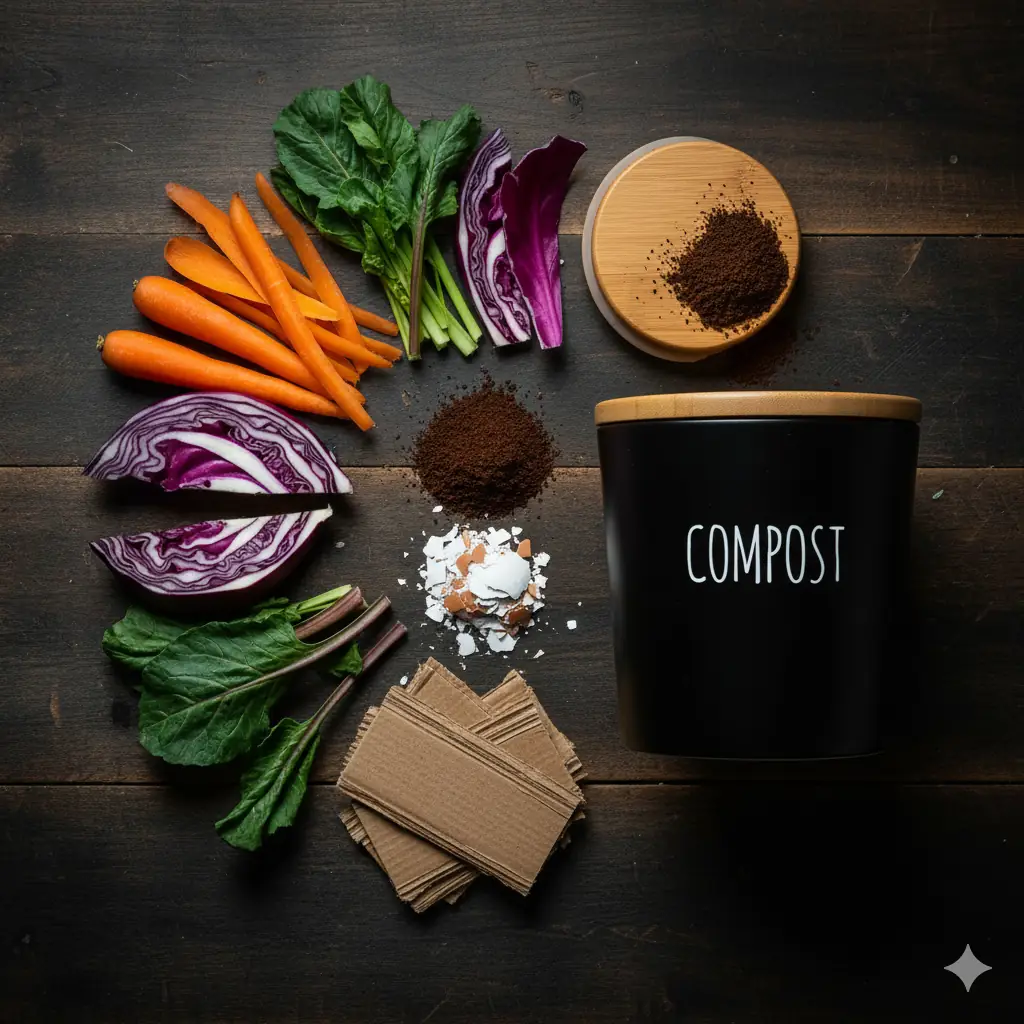
Think about things like banana peels, apple cores, potato skins, wilted lettuce, and the ends of carrots or celery. Simply chop them up into smaller pieces to speed up their breakdown.
Coffee Grounds and Tea Leaves
Don’t let your morning brew’s remnants go to waste! Used coffee grounds are surprisingly rich in nitrogen and are great activators for a slow pile.
Used tea bags are also excellent, provided the bag itself is made of natural fibers (avoid plastic-based mesh bags). You can add both the leaves and the paper filter directly to the pile.
Spent Flowers and Garden Trimmings
While not strictly ‘kitchen’ waste, fresh, soft garden clippings often enter the house. Spent bouquets, houseplant trimmings, and soft pruning bits are welcome additions.
Just make sure any leaves or stalks you add aren’t showing signs of disease, as pathogens might survive in a low-temperature home compost system.
🍂 The Carbon Champions: Balancing with ‘Brown’ Scraps
For every moist ‘green’ scrap you add, you need a dry, carbon-rich ‘brown’ material to balance it out. Carbon provides the structure, prevents compaction, and keeps the essential airflow moving.
Without enough brown material, your pile will quickly turn into a slimy, anaerobic mess—which is composting jargon for ‘stinky sludge’.
Cardboard and Paper
Plain cardboard boxes, particularly the corrugated kind, are fantastic brown material. You must tear them into small pieces or shred them first to increase the surface area for microbes to attack.
Similarly, plain office paper, newspaper, and paper towels (as long as they haven’t been soaked in cleaning chemicals) are excellent carbon sources.
Eggshells
Eggshells are a little unique, as they are mostly calcium carbonate, not carbon. However, they act structurally like a brown material and add valuable minerals to the finished compost.
It’s essential to crush them thoroughly before adding them; otherwise, they can take years to fully break down in your bin.
The Pantry Extras
Stale bread crusts, old flour, expired herbs, and even small amounts of plain popcorn are all dry, carbon-heavy materials that can be successfully incorporated.
If you use wood-based skewers or toothpicks, they can also go in, but they will take a very long time to decompose, so use them sparingly.
🚫 The Compost Blacklist: What to Always Avoid
The success of home composting often lies in knowing what *not* to include. Certain items will either halt the process, attract unwelcome pests, or introduce harmful pathogens.
Meat, Dairy, and Cooked Food
Never add any meat, fish, bones, dairy products (milk, cheese, butter), or oil/grease. These materials are high in fat and protein, decompose very slowly, and cause severe odors.
More importantly, they are a powerful attractant for rats, raccoons, and other scavengers, making them unsafe for most home composting setups.
Pet Waste and Human Waste
While manure from herbivores (like cows or rabbits) is an excellent addition, waste from domestic dogs and cats should never go into a home compost bin. It can carry harmful parasites and bacteria that are dangerous to humans.
Ashes and Treated Materials
Avoid charcoal briquette ashes, as they often contain chemicals that can harm your compost. Similarly, steer clear of sawdust or wood shavings from treated lumber, as the chemicals can contaminate your finished product.
📝 Quick Tips for Successful Scraps Management
Once you know *what* to put in, managing your scraps effectively is the next step to creating beautiful compost quickly.
Size Matters
The smaller the piece, the faster the decomposition. Think less ‘whole apple’ and more ‘diced apple core.’ Chopping scraps into 1-2 inch pieces gives the microbes more surface area to work on.
Bury the Greens
Always try to cover fresh, moist ‘green’ scraps with a layer of ‘brown’ material, like shredded paper or dry leaves. This prevents flies from landing on the food and minimizes odors before they start.
Keep it Varied
The best compost comes from a diverse diet. Don’t just rely on potato peels; mix in grounds, shells, newspaper, and garden waste. A varied mix ensures a balanced nutrient profile in the finished product.
📊 Why Scraps Matter: The Impact
When you commit to composting your kitchen waste, your impact is immediate and significant. According to various environmental studies, food waste is a major problem.
- Roughly 22% of municipal solid waste dumped in landfills consists of food scraps.
- When food decomposes in oxygen-starved landfills, it produces methane, a potent greenhouse gas.
- Diverting kitchen scraps is one of the easiest ways for the average person to reduce their carbon footprint at home.
⭐ Final Notes on Getting Started
Don’t obsess over the perfect ratio when you first start. Composting is an iterative learning process. If your pile is too wet and stinky, add more dry, brown materials like shredded paper.
If your pile looks too dry and activity seems stalled, add some moist green scraps or a splash of water. Your compost pile will let you know what it needs, and you’ll quickly become an expert listener.
By simply holding back those coffee grounds and veggie peels, you are participating in a vital environmental act right from your own kitchen counter.