

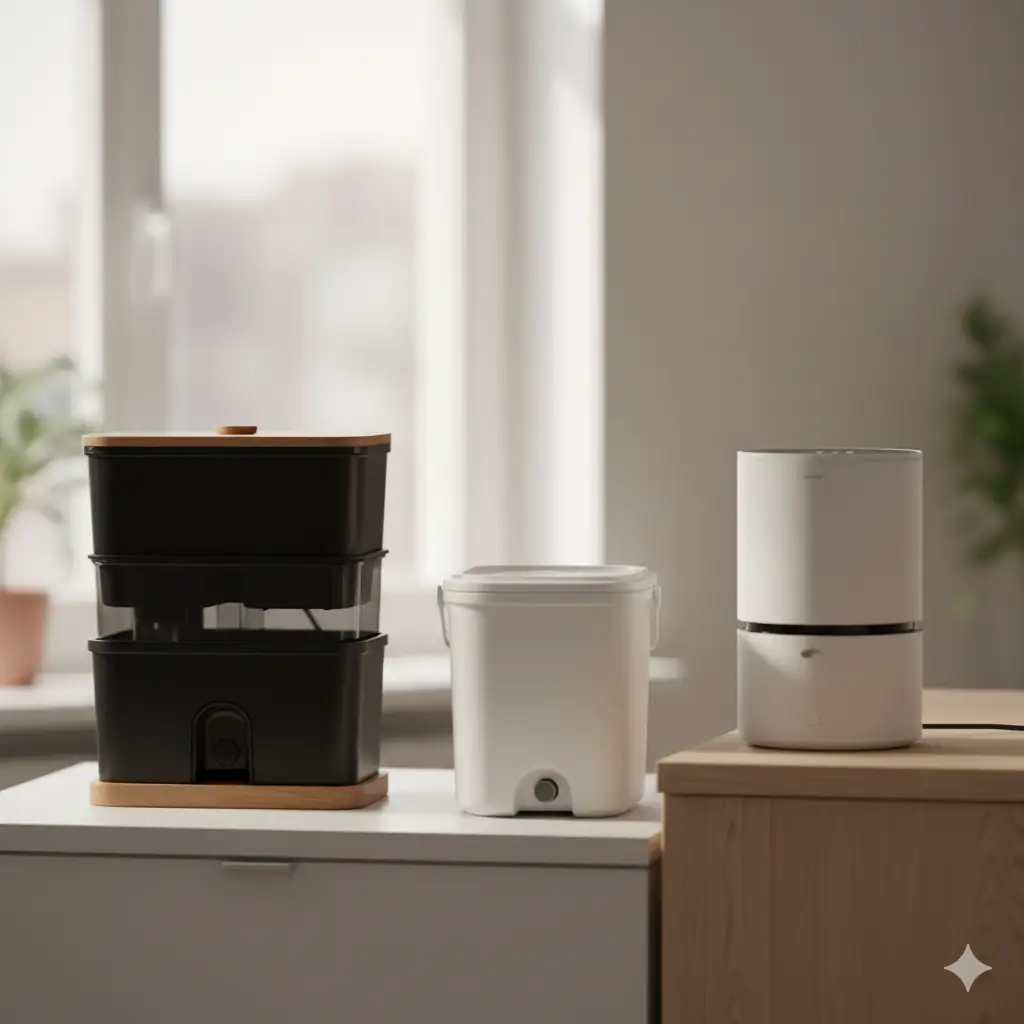

🏡 Dispelling the Myth: Composting is for Everyone
Many apartment dwellers believe that composting is a luxury reserved for those with sprawling backyards and ample outdoor space. This simply isn’t true! With the right approach and a suitable system, anyone can divert their kitchen scraps from the landfill, even in the smallest urban apartment.
The key is selecting a composting method that is compact, odor-free, and specifically designed for indoor or limited outdoor use. Think of it less as a bulky garden project and more as an efficient, eco-conscious kitchen appliance.
Let’s explore the best composting bin options that prove you don’t need a sprawling garden to make a significant environmental impact and create your own ‘black gold.’
🌱 The Indoor Dynamo: Vermicomposting (Worm Bins)
One of the most popular and effective methods for apartment composting is vermicomposting, which uses a special type of worm—red wigglers (Eisenia fetida)—to break down organic waste.
These worms are incredibly efficient, turning food scraps into rich, nutrient-dense ‘worm castings’ and ‘compost tea.’ Plus, they’re surprisingly tidy and odorless if managed correctly.
How a Worm Bin Works
Worm bins typically consist of stacked trays with perforated bottoms. You start by filling the bottom tray with bedding (shredded newspaper, coco coir) and worms, then add food scraps.
As the worms process the food and bedding, they migrate upwards through the perforations to the next tray where fresh food has been added. This leaves the bottom trays filled with finished castings, ready for harvesting.
Key Benefits for Apartments
- Compact: Many worm bins are designed to fit under a sink, in a closet, or on a small balcony.
- Odor-Free: A healthy worm bin, fed correctly, should smell like fresh earth, not rotting food.
- Year-Round Operation: Worms thrive indoors at room temperature, allowing for continuous composting regardless of weather.
- High-Quality Output: Worm castings are an incredibly potent soil amendment, perfect for houseplants or small container gardens.
If you’re looking for a relatively hands-off system that produces fantastic results, a worm bin is an excellent choice for apartment living.
🍚 The Fermentation Innovator: Bokashi Composting
Bokashi composting is a fascinating and highly effective anaerobic (oxygen-free) fermentation process that can handle a wider range of food scraps than traditional composting, including meat, dairy, and oily foods.
This system uses a special ‘Bokashi bran’ inoculated with beneficial microorganisms, which are sprinkled over food waste in an airtight bin. It’s less about decomposition and more about pickling your food scraps.
How a Bokashi System Works
You layer food scraps with Bokashi bran in an airtight bucket. The microorganisms in the bran ferment the waste, preventing it from rotting and smelling. The bin also typically has a spigot at the bottom to drain ‘Bokashi tea,’ a nutrient-rich liquid.
Once the bin is full and has fermented for a couple of weeks, the pickled scraps are not yet finished compost. They need to be buried in soil (a garden bed, a large planter, or even a community garden) to fully break down into usable compost.
Key Benefits for Apartments
- Handles All Food Waste: A major advantage for apartment dwellers who want to compost everything.
- Airtight and Odorless: The fermentation process keeps smells contained.
- Quick Initial Processing: Scraps are fermented in the bin within 1-2 weeks.
- Produces ‘Compost Tea’: A fantastic liquid fertilizer for houseplants.
Bokashi is ideal if you want to pre-treat all your food waste indoors, even if you need an outdoor spot for the final burial stage. Many community gardens welcome Bokashi pre-compost.
💨 The Low-Tech Simplicity: Electric Composter (Food Recycler)
While not strictly ‘composting’ in the traditional sense, electric food recyclers offer a high-tech solution for quickly breaking down food waste indoors.
These countertop appliances use heat, grinding, and aeration to transform food scraps into a dry, sterile, significantly reduced byproduct in a matter of hours.
How an Electric Composter Works
You load food scraps into the device, press a button, and the machine goes to work. It heats the material to sterilize it, grinds it into small pieces, and aerates it to dry it out. The result is a fine, earthy-smelling material that is about 90% reduced in volume.
This output isn’t finished compost, but it’s a sterile, dry additive that can be easily mixed into garden soil, potted plants, or even traditional outdoor compost piles to accelerate their breakdown.
Key Benefits for Apartments
- Speed: Processes food waste in 3-8 hours.
- Ease of Use: Fully automated, press-a-button operation.
- Odor Control: Built-in carbon filters manage odors during the cycle.
- Versatile Output: The resulting material can be stored indefinitely or easily mixed into soil.
If convenience and speed are your top priorities, and you don’t mind the energy consumption, an electric food recycler offers a clean, efficient way to manage food waste in a small apartment.
🌿 Final Considerations for Apartment Composting
Choosing the right system for your small apartment often comes down to a few personal preferences and practicalities.
- Space Available: How much room do you truly have? Under the sink, a corner of the balcony, or a dedicated spot?
- Type of Waste: Do you want to compost all food scraps (including meat/dairy) or just fruits and vegetables?
- Output Use: Do you need finished compost for houseplants, or can you send semi-processed material to a community garden?
- Maintenance Level: How much active involvement (turning, managing moisture) are you comfortable with?
- Budget: Prices vary significantly between systems, from DIY worm bins to high-tech electric models.
Don’t let the size of your living space dictate your eco-friendly ambitions. With these innovative composting solutions, apartment dwellers can actively participate in reducing waste, enriching soil, and contributing to a more sustainable planet, one food scrap at a time. It’s a small step that makes a big difference.