


🌱 The Heart of the Heap: Why the Ratio Matters
Composting—it’s nature’s ultimate recycling program. But turning kitchen scraps and yard trimmings into rich, dark ‘black gold’ isn’t just about piling it up.
It’s a delicate, microscopic process that relies on one key concept: the balance between carbon (C) and nitrogen (N). Think of it as the fuel and the accelerator for your decomposition team.
Without the right mix, your compost pile either stalls out entirely or turns into a smelly, slimy mess. It needs to hit that sweet spot, the Golden Ratio, for truly efficient breakdown.
🔬 Understanding the Dynamic Duo: Carbon and Nitrogen
Carbon: The Energy Source (The Browns)
Carbon materials, often called ‘Browns,’ are the structural foundation of your compost. They provide the necessary energy source for the microbes doing the heavy lifting.
These materials are typically dry, chunky, and slow to break down. Imagine dry leaves, shredded cardboard, wood chips, and straw. They are like the complex carbohydrates in a meal—providing long-lasting energy.
Nitrogen: The Protein (The Greens)
Nitrogen materials, the ‘Greens,’ are the protein source for your microbial army. They are essential for the organisms to grow, reproduce, and build their cellular structure.
These are usually moist, fresh materials like grass clippings, fruit and vegetable scraps, coffee grounds, and manures. They are the instant power boost, driving the decomposition process forward.
⚖️ The Magic Number: The C:N Ratio
So, what exactly is the Golden Ratio? The scientific ideal for most efficient composting is a C:N ratio of around 30:1.
This means you should aim to have 30 parts of carbon for every 1 part of nitrogen, measured by weight. Don’t worry, you don’t need a lab coat and scale to get this right!
For us home composters, it’s easier to think about it in terms of volume and visual balance. A good rule of thumb is to use roughly two to three times as much volume of Browns as you do Greens.
| Material Type | Description/Purpose | Impact on Compost |
|---|---|---|
| Carbon (Browns) | Bulking agent, energy source, air circulation | Prevents sliminess, balances odors, necessary for heat |
| Nitrogen (Greens) | Protein for microbes, accelerates decomposition | Necessary for heating, too much causes ammonia smell |
🛠️ Troubleshooting Your Pile: Too Much or Too Little?
The beauty of composting is that it’s forgiving. If you get the balance wrong, the pile itself will send you clear signals. It’s like baking bread—if it doesn’t rise, you adjust the yeast or the flour.
🚨 Signal: Smells Like Ammonia
If your compost pile smells like rotten eggs or ammonia, you have a classic case of too much nitrogen (Greens). The microbes are swimming in protein and can’t process it all, leading to anaerobic (oxygen-starved) conditions.
The Fix: Add more Browns! Introduce a generous layer of shredded newspaper, dry leaves, or sawdust. Give the pile a good turn to mix the carbon in and introduce fresh air.
🐌 Signal: Nothing is Happening
If your pile looks exactly the same as it did last week, isn’t warm in the middle, and feels dry, you likely have too much carbon (Browns). The materials have all the structure they need but lack the protein to get the decomposition motor running.
The Fix: Add more Greens! Toss in some fresh grass clippings, coffee grounds, or food scraps. Also, check the moisture—it should feel like a wrung-out sponge, not bone dry.
📈 Creating the Perfect Layers: The Lasagna Method
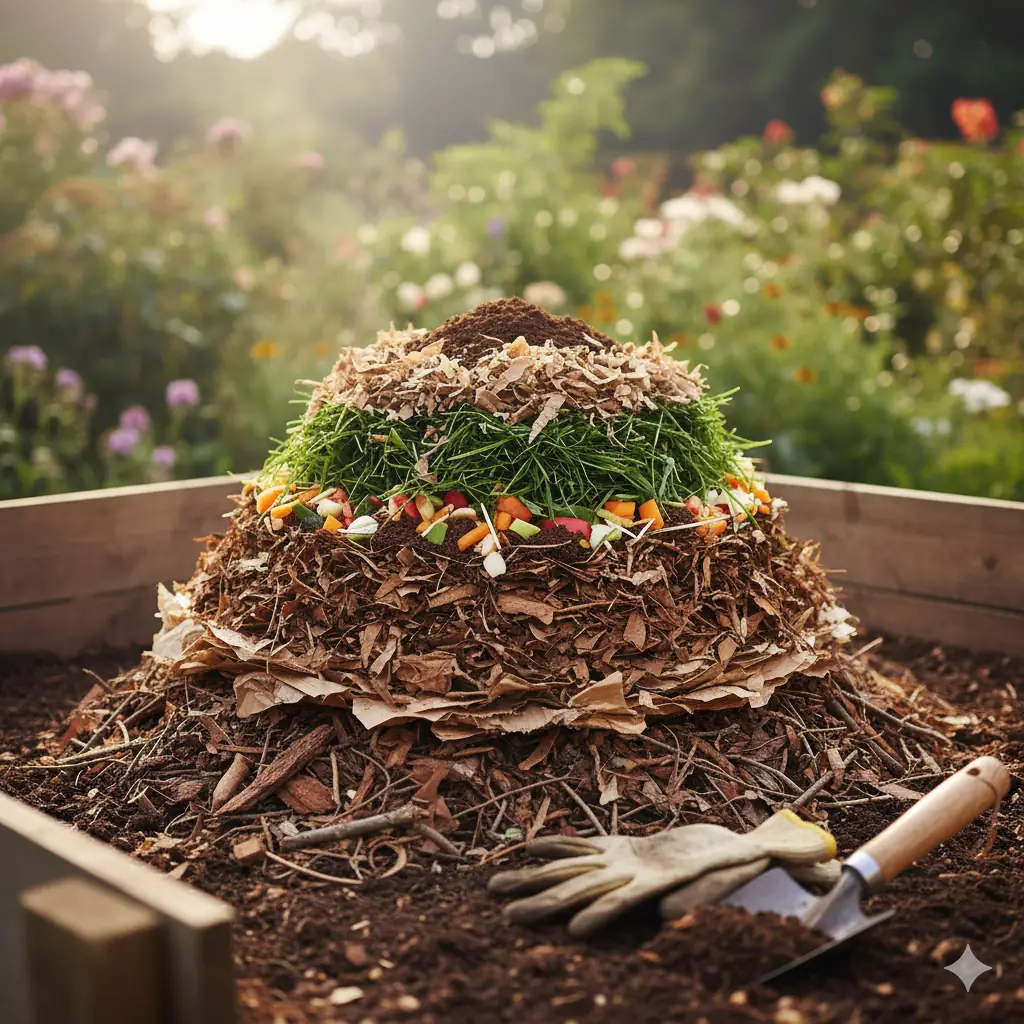
The easiest way to maintain the 30:1 ratio is to build your pile in alternating layers—affectionately known as the Lasagna Method.
- Start with a base layer of coarse Browns (like small sticks or wood chips) for drainage and airflow.
- Add a 4–6 inch layer of your main Browns (dry leaves, shredded paper).
- Top that with a 2–3 inch layer of your Greens (food scraps, grass).
- Repeat the layers, always capping the nitrogen-rich Greens with carbon-rich Browns.
- Finish the pile with a thick layer of Browns to act as a cap, reducing odors and retaining moisture.
This method ensures that the materials are well-distributed throughout the pile, making it easier for the microbes to access both their fuel (C) and their protein (N).
✨ Essential Tips for Ratio Mastery
- Shredding Helps: The smaller the pieces (especially Browns), the faster the microbes can get to work.
- Water is Key: Even with the perfect C:N ratio, decomposition stops if the pile is too dry. Keep it consistently moist.
- Turning is Aeration: Turning the pile regularly (once a week or every time you add a large amount of Greens) introduces oxygen, preventing smelly anaerobic pockets.
- Monitor Temperature: A hot pile (130-160°F) is a sign that your ratio is working and your microbes are thriving.
Insight Box: Remember that C:N ratios for materials are estimates. The key is observation—let the smell, temperature, and texture of your pile guide your material additions. Trust your senses over the science!
🎉 The Payoff: Black Gold in Your Garden
Mastering the carbon-to-nitrogen ratio might sound like a chemistry lesson, but it’s really just a conversation with nature. It’s about giving your microscopic workers the balanced diet they need to succeed.
Keep those Browns and Greens coming, listen to the signals your pile sends, and before you know it, you’ll be rewarded with nutrient-dense, perfectly finished compost—the best possible gift for your garden. Happy composting!