


🍎 From Scraps to Soil: Why Composting Matters to Kids
Composting isn’t just a chore; it’s a living science experiment happening right in your backyard. It offers a tangible lesson in sustainability, waste reduction, and the natural cycle of life.
For kids, it transforms abstract ideas like ‘recycling’ into something they can touch, smell, and actively participate in. It truly is garden magic!
When you involve children, you’re not just creating soil amendments; you’re building habits of environmental responsibility that last a lifetime. Here’s how to make it fun and educational.
🎉 Step 1: Making Composting an Adventure, Not a Task
The first step to success is making the process engaging. Think less ‘take out the trash’ and more ‘feed the dirt creatures.’ Focus on the concepts of transformation and teamwork.
The ‘Dirt Cafe’ Analogy
Introduce the compost bin as a special ‘cafe’ for tiny decomposers—the fungi, bacteria, and worms. The food they eat determines how happy and hard-working they are.
Explain that they need a balanced meal: the Brown crunchy stuff for energy (like bread) and the Green wet stuff for protein (like vegetables). This simplifies the C:N ratio beautifully.
The Kitchen Scraps Collection
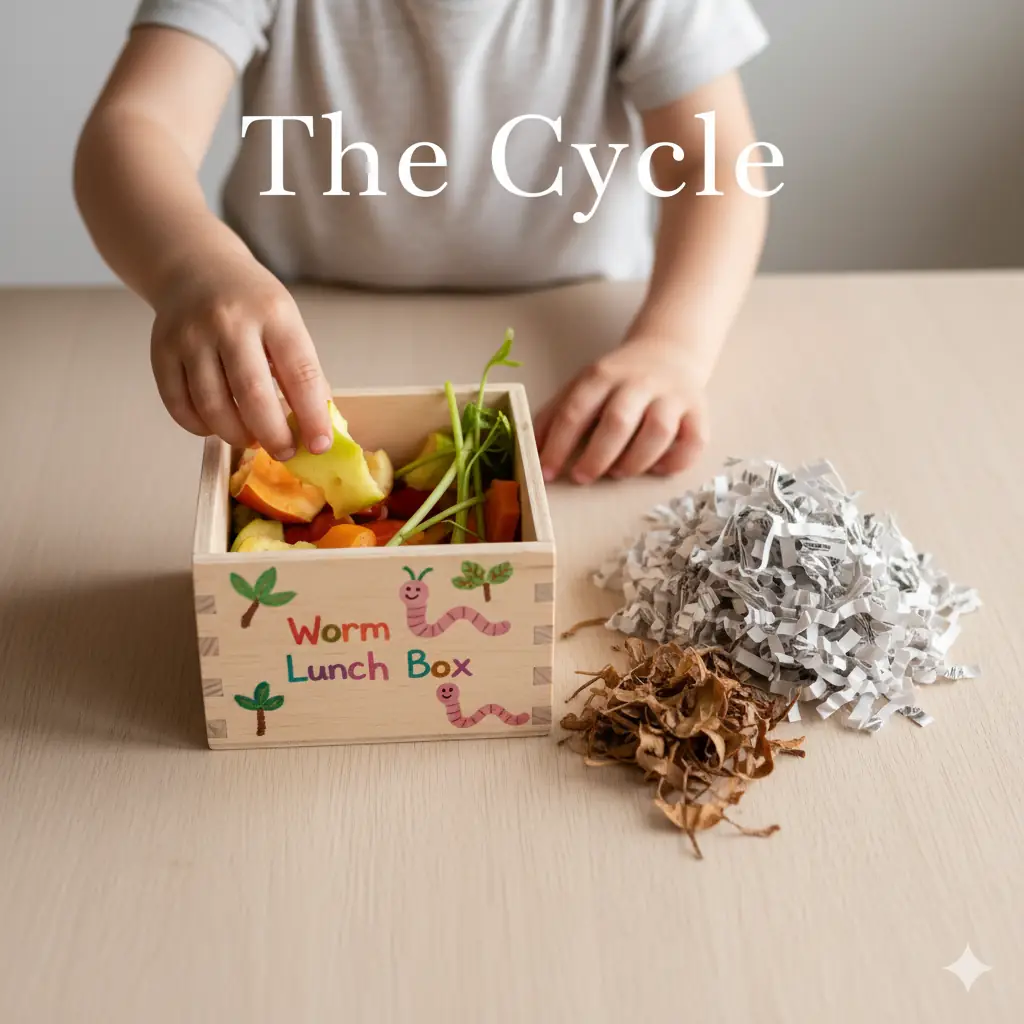
Give your child ownership of the kitchen collection process. Decorate a special container with stickers and give it a fun name, like the ‘Worm Lunch Box.’
Kids love the responsibility of collecting fruit peels, coffee grounds, and eggshells, knowing they are saving them from the garbage bin.
🔬 Step 2: The Science of ‘Browns’ and ‘Greens’
This is where we dive into the core concepts, keeping the explanations simple and visually rich. Focus on texture, not chemistry.
Exploring the Materials
Organize a ‘compost safari’ to gather materials. Use this activity to differentiate between the two necessary components of the pile.
- The Browns (Carbon): These are the dry, crispy, and structural items. We need these to let air in. Examples: dry fallen leaves (best), cardboard torn into small pieces, small twigs, and straw.
- The Greens (Nitrogen): These are the fresh, wet, and colorful items. These are the protein for the microbes and help the pile heat up. Examples: grass clippings, fruit and vegetable scraps, and tea bags.
A fun rule is: if it was once green and is now dry, it’s brown! If it’s fresh and wet, it’s green!
🌡️ Step 3: Monitoring the Health of the Heap
Composting is all about observation. When kids learn to monitor the temperature and smell of the pile, they become true caretakers of the process.
The Temperature Check
The most fascinating part is the heat! Explain that when the tiny decomposers are eating happily, they work up a sweat, making the pile warm.
Purchase a simple compost thermometer and let the child track the temperature weekly. A hot pile means the ‘Dirt Cafe’ is busy; a cold pile means the creatures are sleeping and need more food (Greens) or air.
The Smell Test
Introduce the importance of smell. A healthy pile smells like rich earth.
If it smells like rotten eggs (ammonia), the decomposers are eating too many ‘Greens’ without enough air. The fix? Add more ‘Browns’ and give it a good turn. They’ll quickly see how their actions fix the problem.
🪱 Step 4: Meeting the Composting Crew
The best way to demystify decomposition is to introduce the critters responsible. This turns the process from abstract waste management into a micro-ecosystem study.
Worm Watch
If you’re using a worm bin (vermicomposting), this is easy. If not, when you turn the main pile, encourage your child to look for worms and pill bugs.
Explain that worms are like the pile’s natural churners and their waste (castings) is the best, most powerful ingredient in the final compost.
Aerate, Aerate, Aerate!
Explain that all living things need air, even the microscopic bacteria. Turning the compost pile is like giving the decomposers a big, fresh breath of oxygen.
Let the child help with a small compost aerator or fork. They’ll feel the heat escaping and understand the importance of making space for air.
🎁 The Final Reward: Using the ‘Black Gold’
The most rewarding moment is when the children see the finished product and use it. This closes the loop and proves that their hard work led to a tangible result.
Use the finished compost for a family project, perhaps planting seeds in small pots or amending a vegetable garden.
When the plants grow big and healthy, you can proudly remind them: “That beautiful tomato plant grew so well because of the compost you helped make!” This connection makes the entire process deeply meaningful.
Composting with kids is more than just gardening; it’s a patient lesson in natural processes, responsibility, and the profound concept that nothing is truly waste—only resources waiting for their next job.