

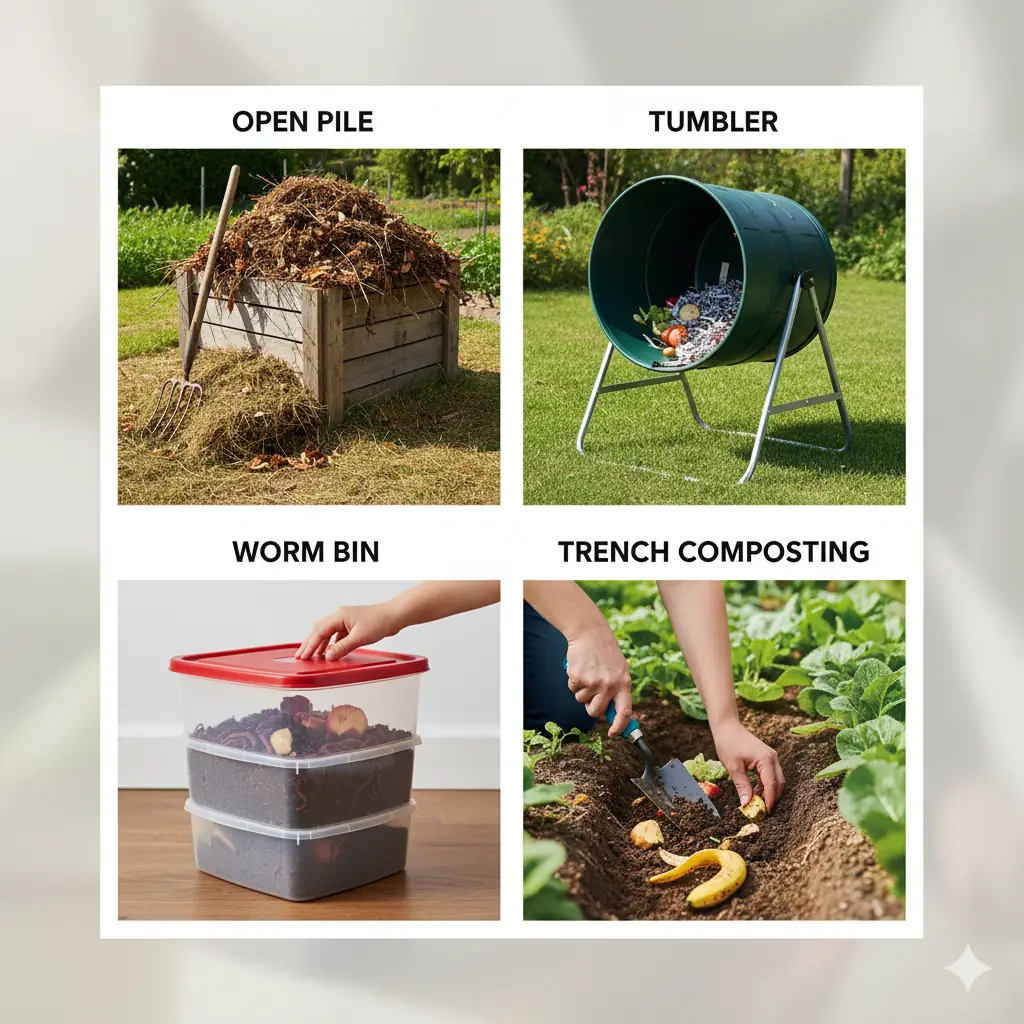

🗺️ The Composting Landscape: Why One Size Doesn’t Fit All
Starting to compost is a fantastic move toward a more sustainable lifestyle. But once you decide to begin, you quickly realize there isn’t just one way to turn waste into soil gold—there are several methods.
Choosing the right method is crucial because it dictates the space you need, the type of waste you can process, and the amount of effort required from you.
The perfect composting method for a sprawling rural homestead will look completely different from the solution needed for a small city apartment balcony. Let’s explore your options.
⏳ Speed vs. Effort: Hot Composting vs. Cold Composting
Before diving into equipment, we must define the two primary approaches based on speed and management.
1. The Hot (Active) Method
This is the quick-fire approach. It requires careful management of the carbon-to-nitrogen ratio (30:1), regular turning, and consistent moisture to generate internal temperatures between 130–160°F.
The benefit? Finished compost in as little as four to eight weeks. The drawback? It demands frequent monitoring and physical labor to turn the large pile.
2. The Cold (Passive) Method
This is the easy, ‘set it and forget it’ method. You simply toss materials into a bin over time without actively managing ratios or turning frequently.
While requiring minimal effort, decomposition takes much longer—six months to a year, sometimes more. It’s perfect for garden trimmings and leaves, but less effective for fast kitchen scrap processing.
🏡 Matching the Method to Your Space and Needs
The practical realities of your home environment are the best guide for selection.
Method 1: Open Piles and Bins (Best for Large Yards)
This is the traditional, classic approach, usually involving large mounds or simple three-sided wooden structures. It’s ideal for those with large volumes of yard waste.
- Pros: Excellent capacity for leaves, grass clippings, and bulk materials; lowest setup cost.
- Cons: Requires significant space; appearance can be messy; harder to turn; slower in cold climates.
- Ideal For: Homeowners with extensive gardens or those who generate large amounts of fall leaves and need hot composting capability.
Method 2: Tumblers (Best for Medium Yards & Efficiency)
Compost tumblers are sealed containers mounted on an axle, allowing them to be rotated easily. They are a great compromise between speed and convenience.
- Pros: Easy to turn and aerate; sealed design deters pests; faster decomposition than passive bins.
- Cons: Limited capacity (often only 30–50 gallons); prone to becoming too wet or dense if not monitored; can be expensive upfront.
- Ideal For: Homeowners who want faster results and a tidy appearance but generate moderate amounts of waste.
Method 3: Vermicomposting (Best for Indoors/Apartments)
Vermicomposting, or worm composting, uses specific worms (usually Red Wigglers) to eat food scraps, producing nutrient-rich ‘castings’ very quickly.
- Pros: Can be done entirely indoors (under a sink, in a closet); ideal for small amounts of kitchen waste; odorless when managed correctly; produces high-quality fertilizer.
- Cons: Cannot process yard waste, meat, or dairy; sensitive to temperature and environment; requires a higher level of attention to the worms’ care.
- Ideal For: Renters, apartment dwellers, and families who only want to process kitchen waste year-round.
Method 4: Trench Composting (Best for Gardeners)
This method involves burying food scraps directly into the garden soil, typically in a trench between rows of vegetables or flowers.
- Pros: No visible pile or bin needed; feeds the soil directly where nutrients are needed; virtually zero maintenance.
- Cons: Very slow process; difficult to do in cold or very dense clay soil; takes up planting space temporarily.
- Ideal For: Gardeners with limited above-ground space who want a slow, continuous feed for their established beds.
✅ Key Questions to Guide Your Decision
To narrow down your choices, ask yourself these three critical questions:
1. What Waste Do I Generate Most?
If you produce large trash bags full of leaves and grass clippings, you need a high-capacity method like an open pile or a large bin. If you mostly have vegetable scraps, a tumbler or a worm bin might be sufficient.
2. How Fast Do I Need Compost?
If you need finished compost quickly for a large garden, you must commit to the Hot Method using a large bin or tumbler. If you don’t mind waiting, the passive or trench methods are much easier.
3. How Much Time Can I Commit?
The time investment is key. Hot composting requires 15–30 minutes of effort weekly (turning, balancing). Vermicomposting requires bi-weekly feeding and occasional bedding checks. Cold/Trench composting is almost zero effort.
✨ Final Tips for Getting Started
- Start Small: It’s better to succeed with a small worm bin than fail with an overwhelming, smelly pile. You can always upgrade later.
- Location, Location, Location: Place your outdoor composter in a spot that is easy to access year-round and that is close to a water source.
- Consider Kitchen-to-Compost: If you choose an outdoor method, use a small, sealed container in your kitchen to collect scraps. This makes the transfer easier and keeps the kitchen tidy.
Choosing the right path isn’t about finding the ‘best’ method overall, but the best method for you.
By assessing your space, waste stream, and commitment level, you can select a system that is efficient, enjoyable, and sustainable for your household for years to come. Happy composting!