


🍶 Beyond the Bin: What Makes Bokashi Unique?
When most people think of composting, they picture a pile in the backyard. Bokashi, however, turns that idea on its head. It’s a distinct and powerful method that uses fermentation, not decomposition, to process food waste.
Originating in Japan, ‘Bokashi’ means ‘fermented organic matter.’ It’s an anaerobic (oxygen-free) process that essentially pickles your food scraps, preparing them for final breakdown in the soil.
This approach offers major advantages, especially for apartment dwellers or anyone who wants a fast, odor-free way to handle challenging kitchen waste, like meat and dairy.
🔬 The Science: Effective Microorganisms (EM)
The magic of Bokashi lies in the specialized ingredient: Bokashi bran. This is usually wheat bran or sawdust inoculated with a mix of beneficial microbes called Effective Microorganisms (EM).
The EM typically includes yeasts, photosynthetic bacteria, and lactic acid bacteria (the same kind used to ferment yogurt or sauerkraut). They are the engine of the Bokashi system.
When the bran is mixed with food scraps and sealed off from air, these microbes rapidly ferment the waste, preventing the putrefaction that causes foul odors.
📦 Setting Up Your Bokashi System
Bokashi requires a simple setup, making it ideal for small spaces. All you really need is a dedicated bucket system.
The Essential Bokashi Bucket
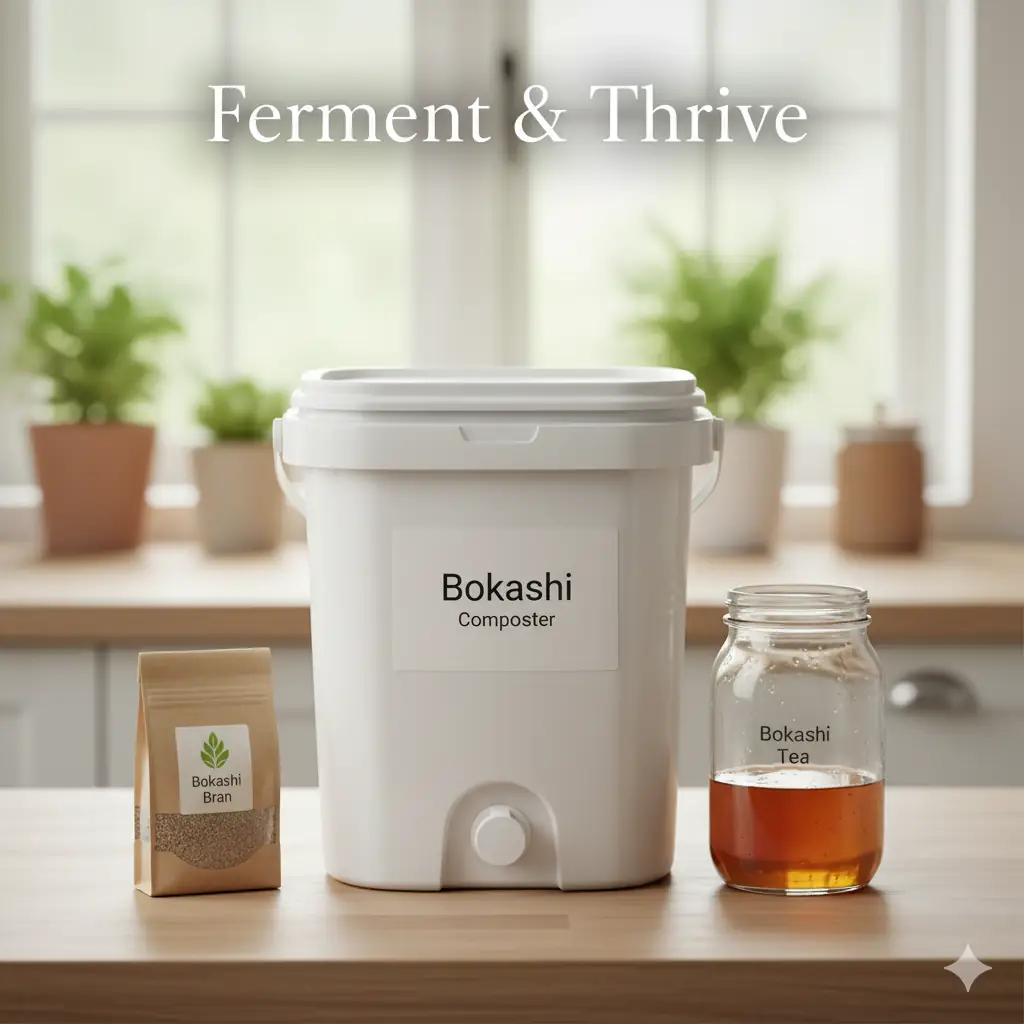
You need an airtight container, usually a plastic bucket with a tight-fitting lid. Critically, commercial Bokashi buckets often come with a spigot at the bottom to drain off the liquid by-product.
The goal is to seal the food waste completely. This is what creates the necessary anaerobic environment for the EM to work their magic.
The Bran Requirement
Keep your Bokashi bran stored in an airtight container to maintain the effectiveness of the living microorganisms. If it smells moldy or bad, it may be time to get a fresh batch.
🍎 The Bokashi Process: Step-by-Step
Using Bokashi is a simple cycle broken into three distinct phases: collecting, fermenting, and burying.
Phase 1: Collect and Layer
- Add Waste: Place a small layer of food scraps (meat, dairy, citrus—all acceptable!) into the bucket. Chopping the scraps into smaller pieces speeds up the fermentation.
- Sprinkle Bran: Sprinkle a generous handful of Bokashi bran over the layer of food scraps. You must cover all exposed food surfaces completely.
- Compress: Use a plate or a potato masher to compress the waste tightly. This pushes out air, maintaining the critical anaerobic environment.
- Seal and Repeat: Close the bucket immediately and tightly. Repeat steps 1–3 daily until the bucket is full.
Phase 2: Ferment and Drain
Once the bucket is full, stop adding waste and seal it for a two-week fermentation period. Place the bucket in a stable, room-temperature location away from direct sunlight.
During this time, you will regularly need to drain the liquid (Bokashi Tea or leachate) from the spigot. This liquid is highly acidic and should not be left sitting with the waste.
Phase 3: The Final Burial
After two weeks, the waste will look largely unchanged, but it will have a strong, sweet-sour, pickled smell. It is now fermented (pre-composted), but not yet composted.
This fermented material is highly acidic and must be mixed into the soil or buried. It will decompose rapidly once buried, usually within 2–4 weeks, leaving behind rich soil.
⚠️ Important Bokashi Tea Note
The Bokashi Tea drained during fermentation is a fantastic asset! It is a potent, acidic liquid rich in nutrients and microbes.
Always dilute it heavily with water (at least 1:100 ratio) before using it as a fertilizer for plants, or pour it straight down slow-running drains to help clean pipes naturally.
✨ Why Choose Bokashi? Comparison and Tips
Bokashi vs. Traditional Composting
- Waste Accepted: Bokashi accepts meat, dairy, and oily foods; traditional bins usually do not.
- Odor: Bokashi produces a harmless, vinegar-like smell; traditional compost can produce foul ammonia odors if managed poorly.
- Speed: Bokashi pre-composts in two weeks; traditional composting takes months to start.
Top Tips for Beginner Bokashi Success
- Use Less Bran: If the final product is excessively wet or smells rotten (not sour-pickled), you likely didn’t use enough bran to cover all surfaces.
- Keep it Compressed: Always press the scraps down tightly to eliminate air pockets, which are fermentation’s enemy.
- Don’t Be Afraid of the White Mold: White, web-like mold in the finished product is actually a sign of successful fermentation. Black, green, or blue mold means too much air got in.
Bokashi is an elegant, efficient, and often cleaner solution than traditional methods, especially if you have a lot of kitchen waste and limited outdoor space. It requires adherence to the airtight process, but the payoff is a fast, odor-managed system that handles nearly all your food scraps.