

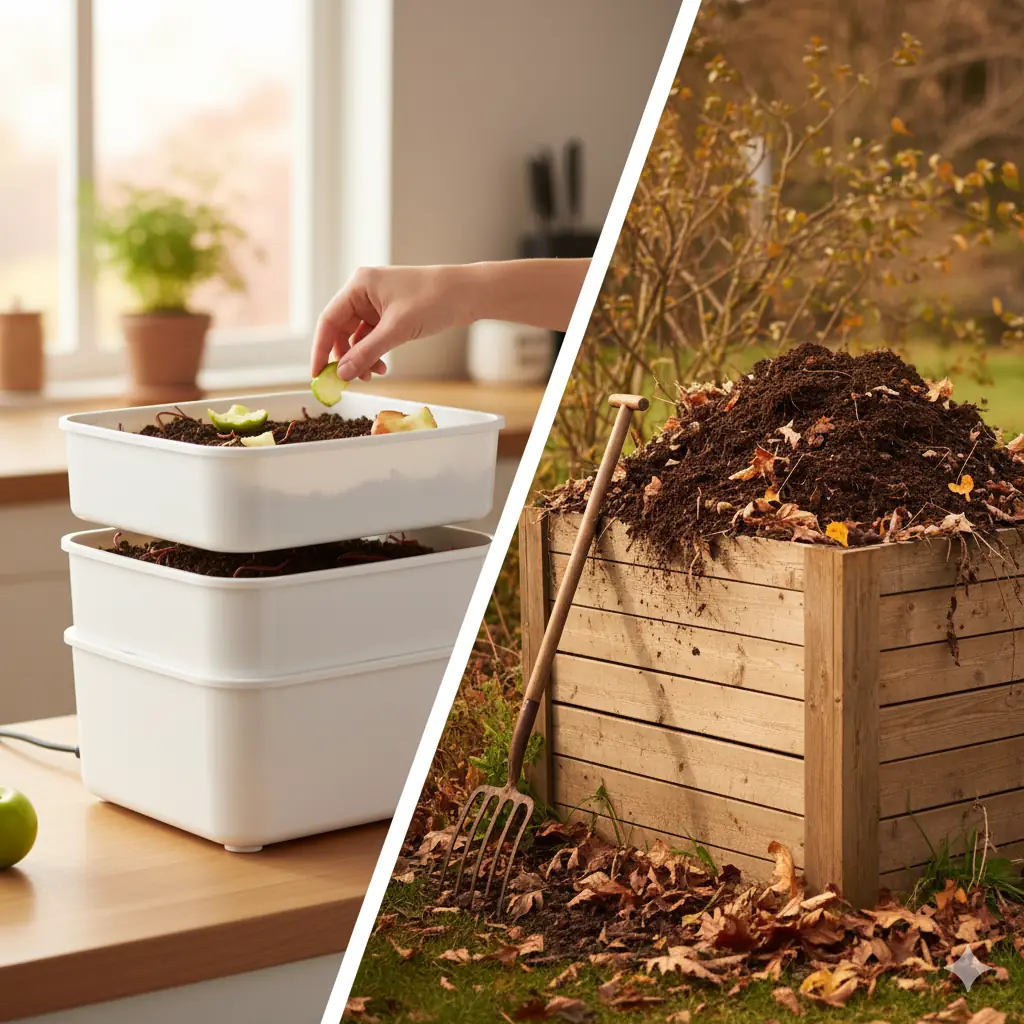

🏡 The Great Divide: Composting Where You Live
Starting to compost is a fantastic step towards sustainability. But a common question arises almost immediately: should I compost indoors or outdoors? The answer, like many things in life, depends entirely on your specific circumstances.
Your living situation, the amount of waste you generate, and your personal comfort levels all play a significant role in determining the best approach for you. There’s no single ‘right’ way, only the right way for *your* home.
Let’s break down the main options for both indoor and outdoor composting, examining their unique benefits and considerations, to help you make an informed choice.
🏠 Indoor Composting: Convenience and Control
Indoor composting solutions are ideal for apartment dwellers, those with limited outdoor space, or anyone who wants year-round access to their composting system, regardless of weather.
Method 1: Vermicomposting (Worm Composting)
This method uses specialized composting worms, typically Red Wigglers, to break down organic waste. Worm bins are compact and can be kept in a kitchen, balcony, or even under a sink.
- Pros: Excellent for kitchen scraps; virtually odorless if managed correctly; produces high-quality worm castings; year-round operation.
- Cons: Cannot process yard waste, meat, or dairy (in large quantities); requires careful temperature management for the worms; initial setup cost for a worm bin and worms.
- Ideal For: Apartment residents, small households, or anyone wanting to divert food waste quickly and produce nutrient-rich fertilizer.
Method 2: Bokashi Composting
Bokashi is a unique anaerobic (oxygen-free) fermentation process that pickles food scraps using special inoculated bran. It’s often done in an airtight bucket indoors.
- Pros: Can process *all* food waste, including meat, dairy, and oils; completely odorless during the fermentation phase; takes up very little space.
- Cons: Produces ‘pre-compost’ that must then be buried in soil or added to an outdoor bin for final breakdown; requires purchasing Bokashi bran.
- Ideal For: Urban dwellers who want to handle all kitchen waste, including challenging items, and have access to a garden bed or outdoor bin for the final stage.
Insight: Indoor systems often focus exclusively on kitchen scraps, which is where most households generate their most problematic waste in terms of smell and pest attraction.
🌳 Outdoor Composting: Volume and Variety
Outdoor composting methods are generally best for those with a yard or garden space, offering greater capacity and the ability to handle a wider range of materials, including bulky yard waste.
Method 1: Traditional Pile or Bin
This is the classic method, involving an open pile, a three-sided bin, or a simple plastic composter. It relies on aerobic decomposition (with oxygen).
- Pros: Can handle large volumes of yard waste (leaves, grass clippings); low-cost setup; produces finished compost directly.
- Cons: Requires more space; can attract pests if not managed properly; can generate odors if out of balance; susceptible to weather conditions.
- Ideal For: Homeowners with gardens, those who generate significant yard waste, and individuals looking for a ‘set it and forget it’ (cold composting) or active (hot composting) system.
Method 2: Compost Tumblers
Compost tumblers are sealed, rotating drums designed to make turning the compost easy. They are a great compromise, offering convenience and faster decomposition.
- Pros: Easy to aerate; sealed design deters pests; faster decomposition than passive bins; tidy appearance.
- Cons: Limited capacity compared to open piles; can be expensive upfront; prone to becoming too wet if not managed.
- Ideal For: Homeowners with moderate waste volume who want faster results, pest deterrence, and a cleaner aesthetic.
🎯 Choosing Your Composting Champion
Your ideal method really boils down to your specific needs and resources. Here’s a quick comparison to help you decide:
| Feature | Indoor Composting (e.g., Worm Bin) | Outdoor Composting (e.g., Traditional Bin) |
|---|---|---|
| Space Required | Minimal (kitchen, balcony, under sink) | Moderate to large (yard, garden corner) |
| Waste Accepted | Kitchen scraps only (worms); All food waste (Bokashi) | Yard waste, most kitchen scraps (no meat/dairy typically) |
| Odor Potential | Low (with proper management) | Moderate (if not managed well) |
| Pest Attraction | Very Low (enclosed, specific waste) | Moderate to High (open access, wider waste) |
| Finished Product | Worm castings; pre-compost (Bokashi) | Ready-to-use compost |
✅ Making the Right Decision for You
Consider your living situation first. If you’re in an apartment, indoor options like vermicomposting or Bokashi are clear winners. If you have a yard, an outdoor bin or tumbler might make more sense.
Also, think about what type of waste you primarily generate. A mix of kitchen and yard waste might even lead you to use both: an indoor system for kitchen scraps and an outdoor one for garden debris.
No matter which path you choose, starting to compost is a rewarding journey that reduces waste and enriches your environment. Pick the method that feels most manageable and jump right in!