


☕ The Daily Dilemma: What to Do with Used Tea Bags
For tea lovers, the used tea bag is a daily source of kitchen waste. It seems inherently compostable—it’s just leaves and paper, right? The answer, unfortunately, is a little more complicated today.
While the tea leaves themselves are an excellent addition to your pile, many modern tea bags contain hidden components that simply do not break down, such as plastic polymers or synthetic fibers.
Learning how to identify and properly prep your tea bags is essential for maintaining the integrity of your compost and ensuring you aren’t adding non-biodegradable waste to your garden.
🔬 Tea Leaves: Compost Superstars (The Good News)
Let’s start with the easy part: the tea leaves themselves. Used tea leaves are fantastic for compost, whether they are black, green, or herbal varieties.
Nitrogen and Nutrients
Used tea leaves are rich in nitrogen, acting as a high-quality ‘Green’ material in the C:N balance. They provide a gentle boost to microbial activity and decomposition speed.
They also contain trace elements and organic matter that enrich the finished compost, improving soil structure and plant nutrition.
Acidity Is Not an Issue
Just like coffee grounds, the slight acidity of tea leaves is neutralized during the hot composting process. The finished compost will be pH-neutral, so don’t worry about harming your soil or plants.
⚠️ The Hidden Problem: Plastic in the Paper
The main challenge isn’t the tea; it’s the bag itself. Many mass-market tea bags are sealed with polypropylene, a type of plastic, to help the bag retain its shape when wet.
Identifying Non-Compostable Bags
If a tea bag retains a perfect square or triangle shape after being steeped, or if the edges look fused and synthetic, it likely contains plastic fibers. This plastic will not decompose and will remain as microplastic fragments in your final compost.
Pyramid-shaped or silky-feeling tea bags are almost always made of nylon or other plastics and should be avoided entirely in the compost bin.
✂️ The Proper Method: Two Simple Steps
If you aren’t sure if your tea bag is 100% compostable (many specialty and organic brands are), the safest and most effective method involves one simple step.
Step 1: Open and Empty the Bag
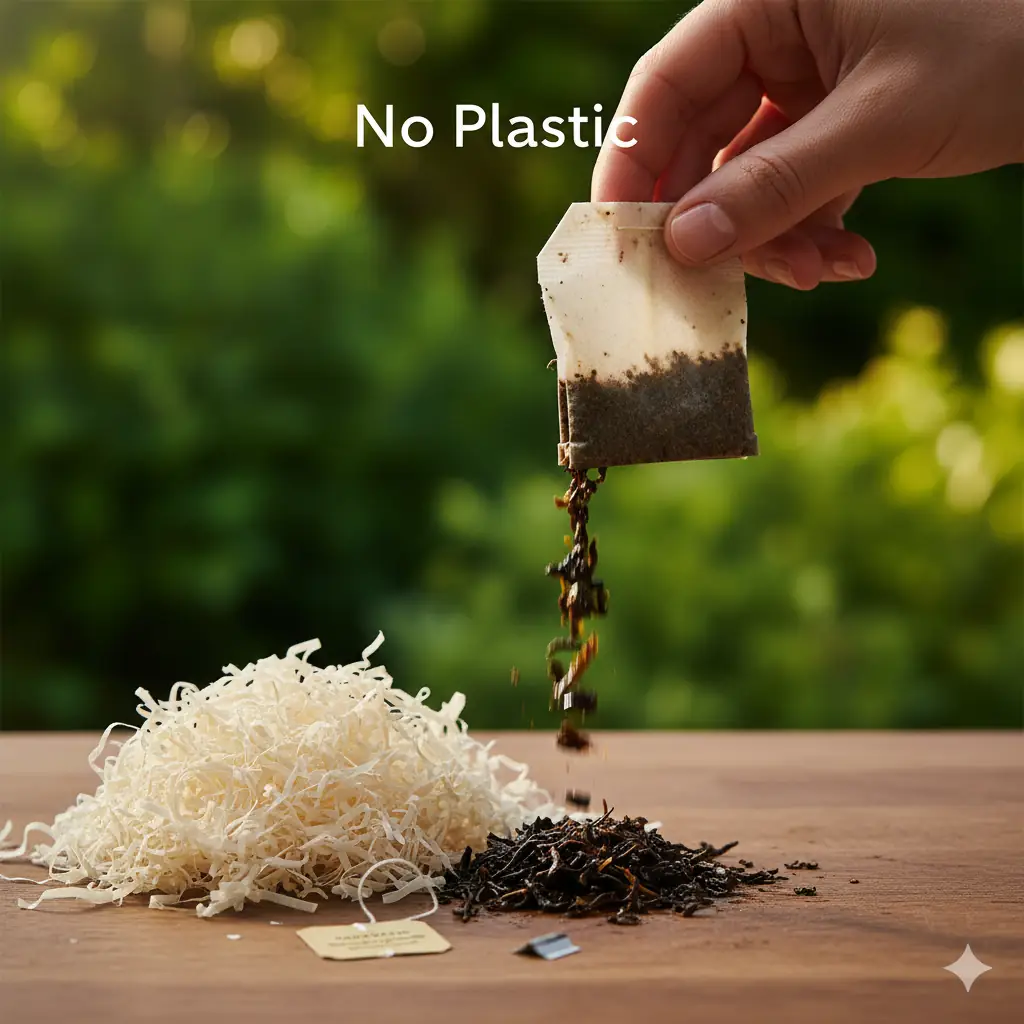
Instead of tossing the whole bag, tear or cut the tea bag open and empty the spent tea leaves directly into your compost pile or kitchen scrap container.
The leaves are now free to break down quickly and enrich the pile, while you can easily inspect the bag material.
Step 2: Check and Discard the Remainder
Look closely at the emptied bag, string, and tag.
- Compostable: If the bag is simple paper (like filter paper) and held together with no visible plastic seal, you can compost the paper itself.
- Non-Compostable: If the bag has staples, strings attached with glue, or feels synthetic, toss those non-biodegradable parts in the trash.
🚫 What to Watch Out For: Staples and Tags
Even if the bag itself is made of paper, check for metallic staples and printed tags. These may not break down in time or may introduce ink that you don’t want in your organic compost.
Remove all staples and glossy paper tags before adding the bag to the pile. This attention to detail ensures your final product is clean and safe for your garden.
Example: Many premium loose leaf tea bags come with a small metal staple to secure the string. Always pinch and remove that staple before composting the paper and leaves.
♻️ Alternative: Choosing Truly Compostable Tea
The easiest solution to the tea bag dilemma is to switch to loose leaf tea or select brands that explicitly label their tea bags as 100% plastic-free, biodegradable, or certified compostable.
Loose Leaf Tea
Using loose leaf tea eliminates the bag problem entirely. You can simply add the wet, spent leaves directly to your compost pile or use them as a gentle topdressing around acid-loving plants like roses or rhododendrons.
Look for Certifications
Some major tea brands are switching to PLA (polylactic acid) or other bio-based materials, but PLA often requires commercial composting conditions. Look for brands that confirm their bags are safe for *home* composting.
✨ Composting Tea Bag Tips
- Mix Them In: Never let tea bags sit in a clump. Spread the leaves out and mix them with dry carbon material.
- Use as Worm Food: Worms love tea leaves. They break down quickly and are a great addition to vermicomposting bins.
- Dechlorinate Water: If you use brewed tea water to moisten your compost, ensure the water has been dechlorinated (left out overnight) to protect the beneficial microbes.
With minimal effort—just opening the bag and removing the non-biodegradable bits—you can harness the excellent nitrogen and organic matter found in tea leaves. This simple habit keeps your compost healthy and your environmental footprint light.