


🍎 The Smallest Pest: Why Fruit Flies Love Your Compost
Starting a compost pile is great for the environment, but it can sometimes come with tiny, buzzing side effects: fruit flies. These pests aren’t a sign that your compost is failing, but rather that you’ve unintentionally set out a perfect buffet for them.
Fruit flies thrive on exposed, fermenting sugars and moisture. Your fresh kitchen scraps, especially fruit peels and vegetable tops, are precisely what they are looking for to lay their eggs.
The good news is that preventing fruit flies doesn’t require chemicals. It requires simple changes to your management routine, focusing on denying them access to their favorite food source.
🚫 Strategy 1: The ‘Cover Up’ Rule (Denying Access)
The most effective way to prevent fruit flies from laying eggs in your compost is to simply hide the food. They cannot access what they cannot see or smell.
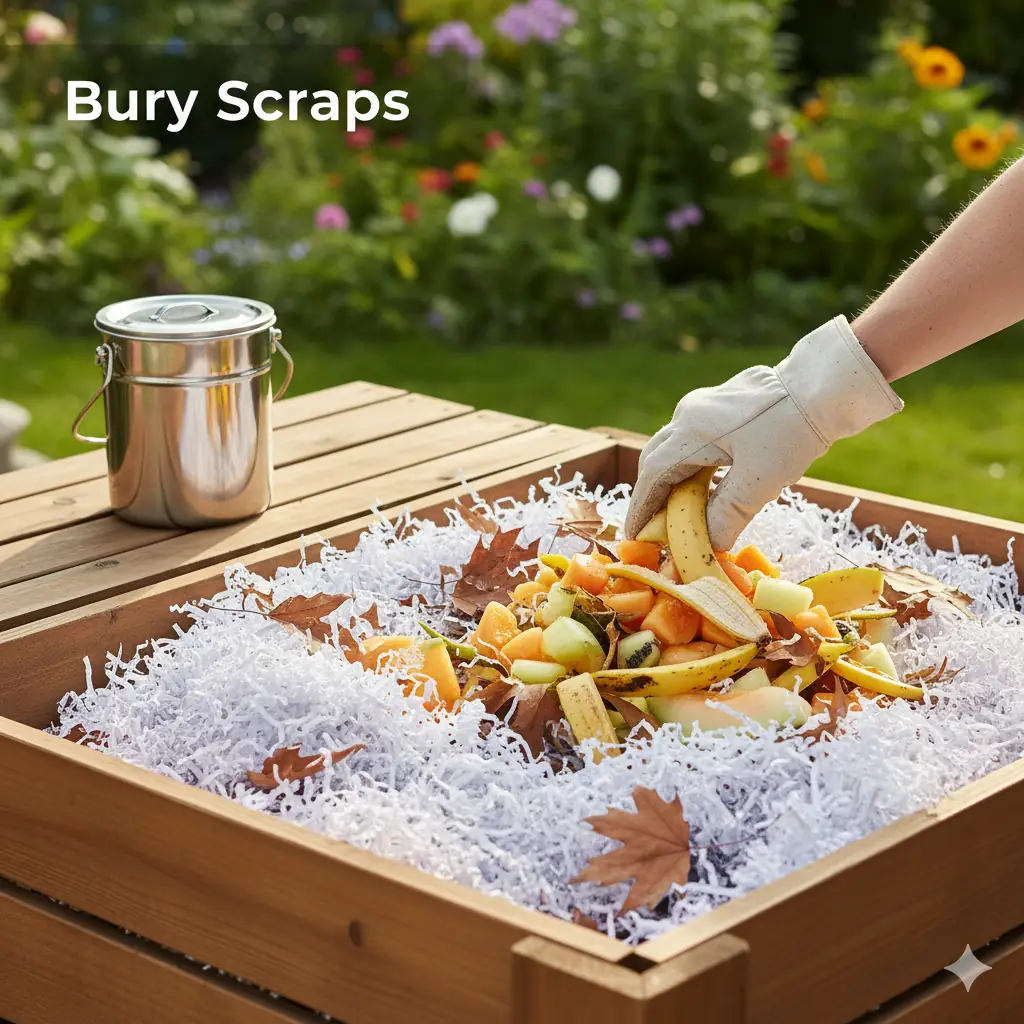
Bury All Scraps Deeply
Never leave fresh kitchen waste sitting on the surface of your compost pile or in your kitchen collection bucket. This is the single biggest attraction for fruit flies.
When adding scraps, dig a small hole, drop the ‘Greens’ (food waste) in, and cover them immediately with a thick layer—at least 6 to 8 inches—of dry ‘Browns’.
Use the Right Cover Material
Your covering material should be dry, fluffy, and absorbent. Excellent choices include shredded newspaper, sawdust, dry leaves, or even a shovel full of finished compost or garden soil.
This barrier smothers the odors and prevents the female flies from reaching the food to lay their eggs, effectively stopping the cycle.
✨ Design Highlight: The Carbon Cap
Always maintain a permanent, thick cap of dry ‘Browns’ on top of your compost pile. This protective layer should be the last thing you see when you walk away from your bin.
⚖️ Strategy 2: Balance and Breakdown (Removing the Breeding Ground)
Fruit flies love wet, sticky, slow-moving fermentation. By keeping your compost hot, fast, and balanced, you make it an unpleasant breeding environment.
Manage Moisture and Density
If your compost is too wet, it becomes slimy and attracts flies. Always balance wet food scraps with dry, absorbent ‘Browns’ to maintain the ‘wrung-out sponge’ consistency.
This balance eliminates the stagnant, overly wet surfaces that fruit flies need to survive and reproduce. Too much moisture equals too many flies.
Chop and Disperse
Large pieces of fruit (like melon rinds or whole banana peels) take longer to break down and emit sugar scents for days. Chop these large scraps into small pieces (1-2 inches) to speed up decomposition.
Faster decomposition means the sugars are consumed by the microbes quickly, removing the food source before the flies can establish a population.
🏠 Strategy 3: Managing Indoor Collection
Often, the fruit fly problem starts not in the outdoor bin, but in the kitchen container where you collect scraps.
- Seal It Up: Use a sealed container with a tight-fitting lid for your kitchen scraps. This prevents flies from getting to the food while it’s waiting to be taken outside.
- Empty Frequently: Do not let scraps sit in the kitchen for more than a few days, especially during warm weather. Empty the container into the main compost pile often.
- Freeze Scraps: If you collect scraps slowly, freeze them in a container until you have enough volume to take them out. Freezing kills any existing eggs or larvae, giving you a fresh, clean start in the main pile.
罠 Strategy 4: Traps (Targeted Removal)
If a few persistent flies still seem to find their way to your bin or your kitchen, simple, natural traps can effectively reduce the population.
Apple Cider Vinegar Traps
Fill a small jar halfway with apple cider vinegar and add a single drop of dish soap. The soap breaks the surface tension, causing the flies to sink after being attracted to the vinegar.
Place this trap near the compost area or kitchen collection point. It’s highly effective and entirely non-toxic.
A Natural Conclusion
Fruit flies are simply a part of the natural cycle, but they don’t have to be a pest. Their presence is a great indicator that you need to adjust your technique.
By consistently burying those tempting sugary ‘Greens’ and maintaining a dry, active pile, you deny fruit flies both the food and the breeding environment they need to thrive. Happy composting!