

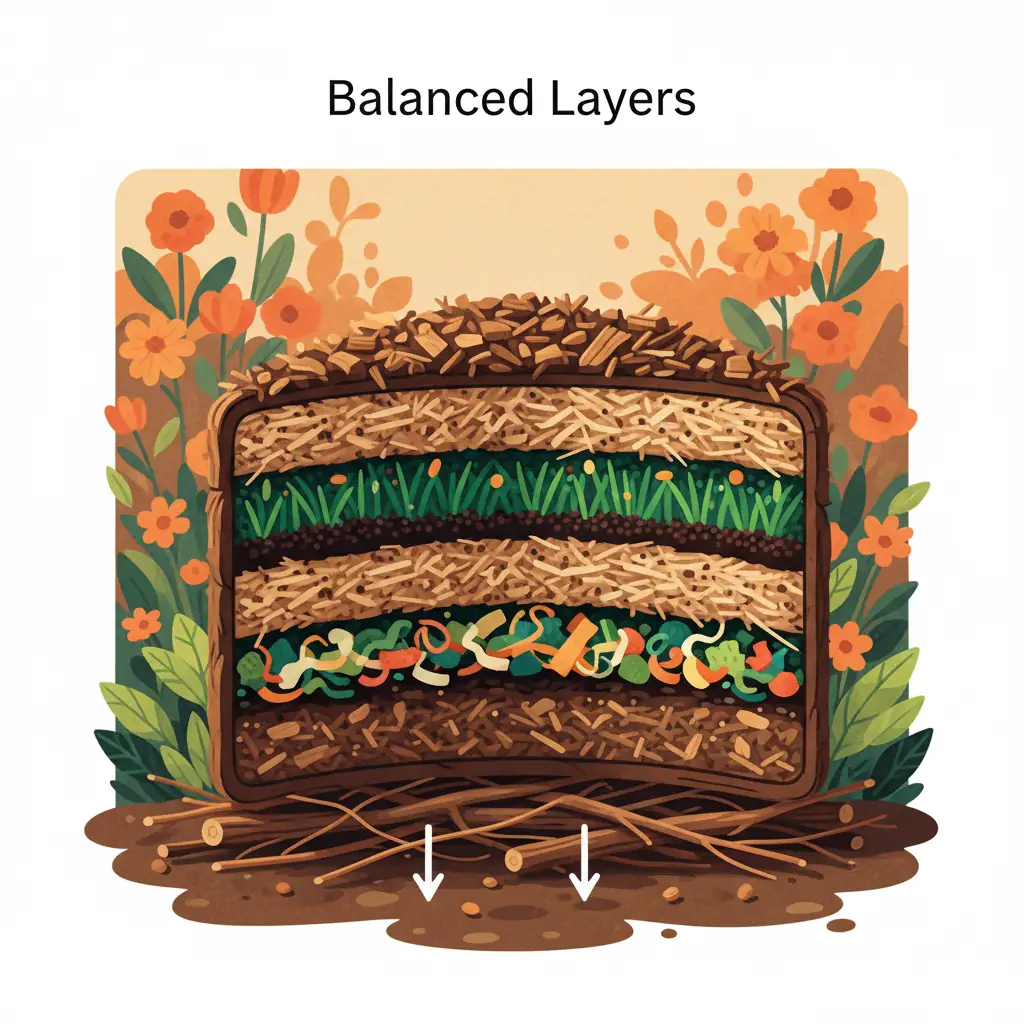

🍰 The Art of Stacking: Why Layering Works Wonders
Composting isn’t just about mixing ingredients; it’s about structuring them for success. Imagine baking a cake—you wouldn’t just toss all the ingredients into the oven; you layer them strategically.
The same principle applies to your compost pile. Proper layering, often called the Lasagna Method, ensures the beneficial microbes have everything they need for efficient, rapid decomposition.
This technique guarantees even distribution of carbon, nitrogen, air, and moisture, which translates directly into faster compost and zero bad smells.
🔬 The Science Behind the Stack
Layering directly addresses the two biggest challenges in composting: balancing the Carbon-to-Nitrogen (C:N) ratio and preventing compaction.
C:N Balance Made Easy
The ideal ratio is around 30 parts Carbon (Browns) to 1 part Nitrogen (Greens). Layering ensures that every nitrogen-rich, wet component is immediately buffered by a carbon-rich, dry component.
For example, a thick layer of shredded dry leaves (Carbon) will soak up the excess moisture and nitrogen from a thin layer of food scraps (Nitrogen), preventing odors and promoting efficient feeding.
Airflow and Structure
By alternating materials, you create structure. The chunky ‘Browns’ (like straw or leaves) prevent the wet ‘Greens’ from clumping together and driving out oxygen.
This structural integrity keeps the pile fluffy and aerobic, which is necessary for the fastest, cleanest decomposition possible.
🏗️ Step-by-Step: Building Your Compost Lasagna
This method works best when you have pre-gathered your materials, especially a good reserve of dry ‘Browns’ to cap your pile.
- The Foundation (Drainage Layer): Start with a thick 4–6 inch layer of coarse, chunky ‘Browns’ at the bottom. Use materials like small twigs, wood chips, or straw. This base is non-negotiable for ensuring drainage and preventing the bottom of the pile from becoming a soggy, anaerobic mess.
- The Carbon Base: Add a 4–6 inch layer of finely shredded ‘Browns.’ This includes dry leaves, shredded newspaper, or cardboard. This is the main absorbent structure.
- The Nitrogen Fuel: Now, add a thinner 2–3 inch layer of ‘Greens,’ such as kitchen scraps, coffee grounds, or grass clippings. Always ensure the Greens layer is visually thinner than the Carbon layer.
- The Carbon Cap: Immediately cover the ‘Greens’ layer with another 4–6 inch layer of dry ‘Browns.’ This covers odors, balances the nitrogen, and acts as a filter.
- Repeat and Maintain: Continue repeating steps 3 and 4 (Greens followed by Browns) until your pile reaches at least 3x3x3 feet.
Always try to keep the fresh, wet scraps buried deep inside the pile, surrounded by carbon. This maximizes the heat generated by the microbes.
🔄 Integrating New Scraps Into the System
Once your compost pile is initially built, you don’t need to rebuild the entire lasagna every day. The key is applying the layering principle to your daily additions.
The Pocket Method
Instead of spreading new kitchen scraps over the whole surface, use the ‘Pocket Method.’ Dig a hole or pocket in the existing pile, dump the scraps in, and then completely cover them with a generous scoop of dry ‘Browns’ you keep stockpiled nearby.
This ensures the wet scraps are balanced and hidden from flies and pests, maintaining the pile’s overall structural integrity.
💧 Moisture and Density Check
Layering helps control moisture, but it doesn’t eliminate the need for monitoring. If you notice a layer is getting too dry, lightly mist it with water before adding the next layer.
If you see a section looking soggy or dense, it’s a sign that you need to add more structural bulking agents, like straw or wood chips, to create better airflow before that section goes anaerobic.
Optimal Layering Summary:
- Thick, Dry Browns: Provide structure, carbon, and absorbency. (The bulk)
- Thin, Wet Greens: Provide nitrogen and moisture. (The fuel)
- Small Pieces: Ensure all materials are chopped or shredded for fastest results.
Proper layering simplifies the entire composting process. It makes it easier to manage the essentials, prevents the worst problems (odor and compaction), and ensures your hardworking microbes deliver that perfect, crumbly ‘black gold’ on a reliable schedule.