

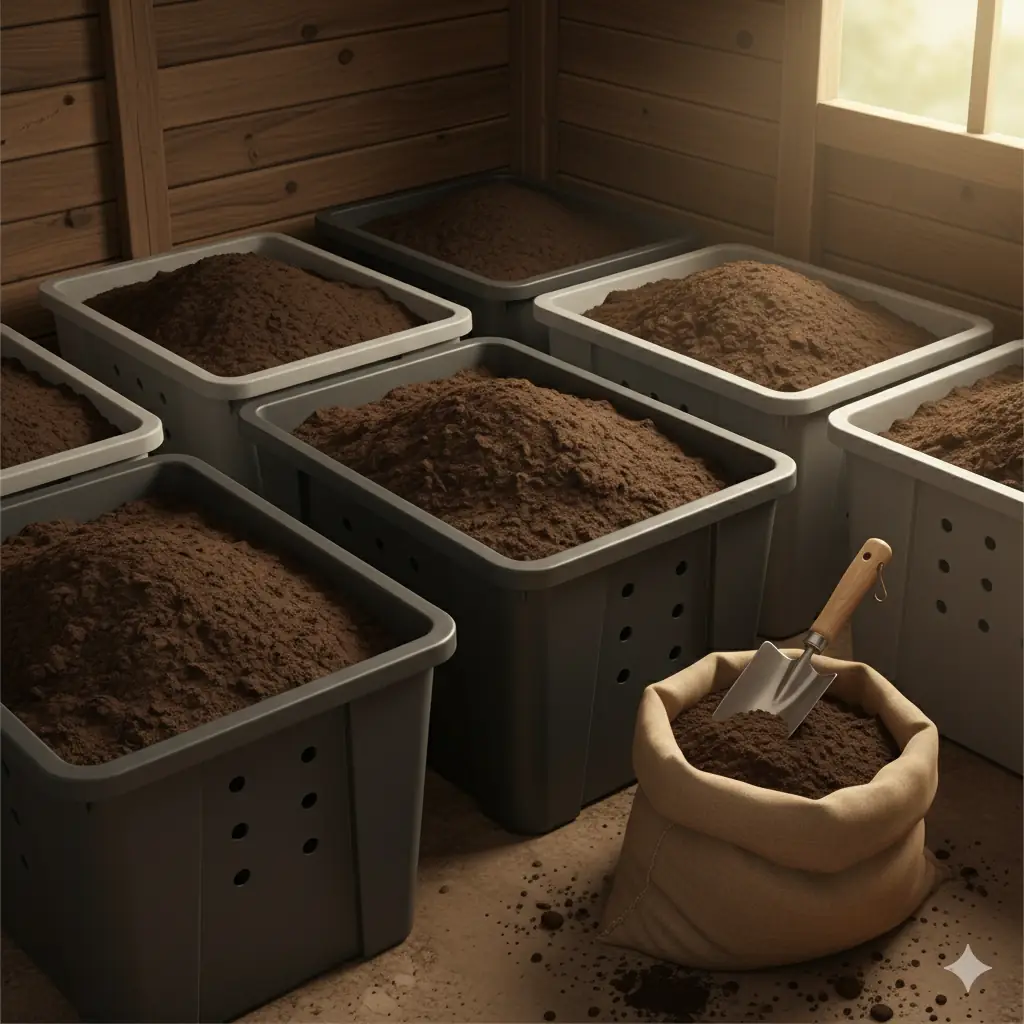

You’ve done the work, patiently turning scraps and yard waste into rich, dark compost—the gardener’s equivalent of ‘black gold.’ It’s a truly satisfying accomplishment! But now you face a common, quiet question: how do you keep this living, breathing soil amendment fresh, potent, and safe until you’re ready to use it?
It turns out, storing finished compost isn’t as simple as just dumping it in a pile and walking away. As a vibrant, microbially-rich material, it needs specific conditions to maintain its quality and prevent issues like nutrient loss or attracting pests. Think of it like storing a very fine wine; the conditions matter immensely.
🌱 Understanding the Needs of Finished Compost
Before we dive into the ‘how-to,’ let’s quickly touch on the ‘why.’ Finished compost is more than just dirt; it’s a living ecosystem. Its primary value lies in the billions of beneficial microorganisms, essential nutrients, and stable organic matter it contains.
Improper storage can harm these microbes, leach out key water-soluble nutrients (like nitrogen), or cause the compost to go anaerobic (losing oxygen). When compost goes anaerobic, it develops an unpleasant odor, and the beneficial biology dies off, significantly reducing its value in your garden beds.
Key Enemies of Stored Compost
- Excess Water: Leads to compaction and anaerobic conditions.
- Direct Sun/Heat: Can dry it out too much and kill beneficial microbes.
- Pests: Rodents or insects can move in if the storage is accessible.
- Nutrient Leaching: Rain or irrigation washing through the pile carries away soluble nutrients.
🧺 Exploring the Best Methods for Safe Compost Storage
The best storage solution for you will likely depend on the volume of compost you have and how long you intend to store it. Whether you have a few wheelbarrows full or just a bucket, there’s a practical, safe solution that fits your personal needs.
1. Short-Term Storage (0-3 Months)
If you plan to use your compost relatively soon—for example, within the next gardening season—simplicity is key. You are mainly concerned with moisture regulation and light protection during this brief holding period.
This is akin to storing fresh-picked herbs in a slightly damp paper towel in the fridge; you’re just trying to preserve the current state until use. A simple covering and elevation will do the trick.
- Use a Tarp or Covering: Simply placing your compost in a small pile and covering it with a breathable tarp (like burlap or heavy-duty landscape fabric) is effective. This shields it from heavy rain and direct sun while allowing a little essential airflow.
- Elevate the Pile: Store the pile on a wood pallet or a few bricks. This prevents moisture from wicking up from the ground and allows for better drainage should any water find its way in.
2. Medium-to-Long-Term Storage (3-12 Months)
For those who accumulate large batches or want to hold onto their compost for a full year until the next major planting, a more robust, contained system is best. This offers greater defense against weather extremes and potential pests.
Choosing the Right Container
The ideal container allows for some gas exchange and drainage. Completely sealed containers are generally a bad idea because the lack of oxygen can lead to the unpleasant, rotten-egg smell we associate with anaerobic conditions, which kills the beneficial biology.
- Plastic Storage Totes (with Modifications): Standard 18-gallon totes work great. Crucially, you must drill a dozen or so small holes in the lid and the bottom. The holes in the bottom allow for drainage, and the lid holes ensure a minimal amount of essential air exchange.
- Repurposed Barrels or Bins: Old, clean plastic trash cans or rain barrels can be used effectively. Again, drainage holes are non-negotiable. Place these containers in a shaded area, like under a deck or in a tool shed, to keep temperatures stable.
- The Three-Sided Bin: If you have a truly large quantity, consider building a simple three-sided wood bin (like a mini storage bay) with a roof or covering. This offers maximum ventilation while providing excellent protection from leaching rain.
Moisture Management: The Golden Rule
Regardless of the method you choose, the key to successful, long-term storage is moisture control. The compost should remain consistently moist, like a wrung-out sponge, but never soaking wet. If it feels dusty and dry, a light misting with water is necessary to keep those beneficial microorganisms alive and thriving.
It’s important to check on your stored compost every few months, especially in dry or hot climates. Just open the lid, give it a stir with a hand trowel, and feel the texture. Simple, intentional checks prevent major problems from forming silently.
✨ Keeping Your Black Gold Perfect
Storing your finished compost safely is less about complex science and much more about thoughtful common sense. By providing a cool, shady, and slightly ventilated environment that protects the material from direct rain and extreme sun, you ensure that the beneficial biology stays healthy and ready to work for you.
The small effort you put into proper storage today will pay huge dividends when you finally spread that rich, dark compost onto your garden beds, knowing you’re giving your plants the very best start. It’s the final, important step in a fulfilling journey of turning organic waste into true wealth for your soil.