

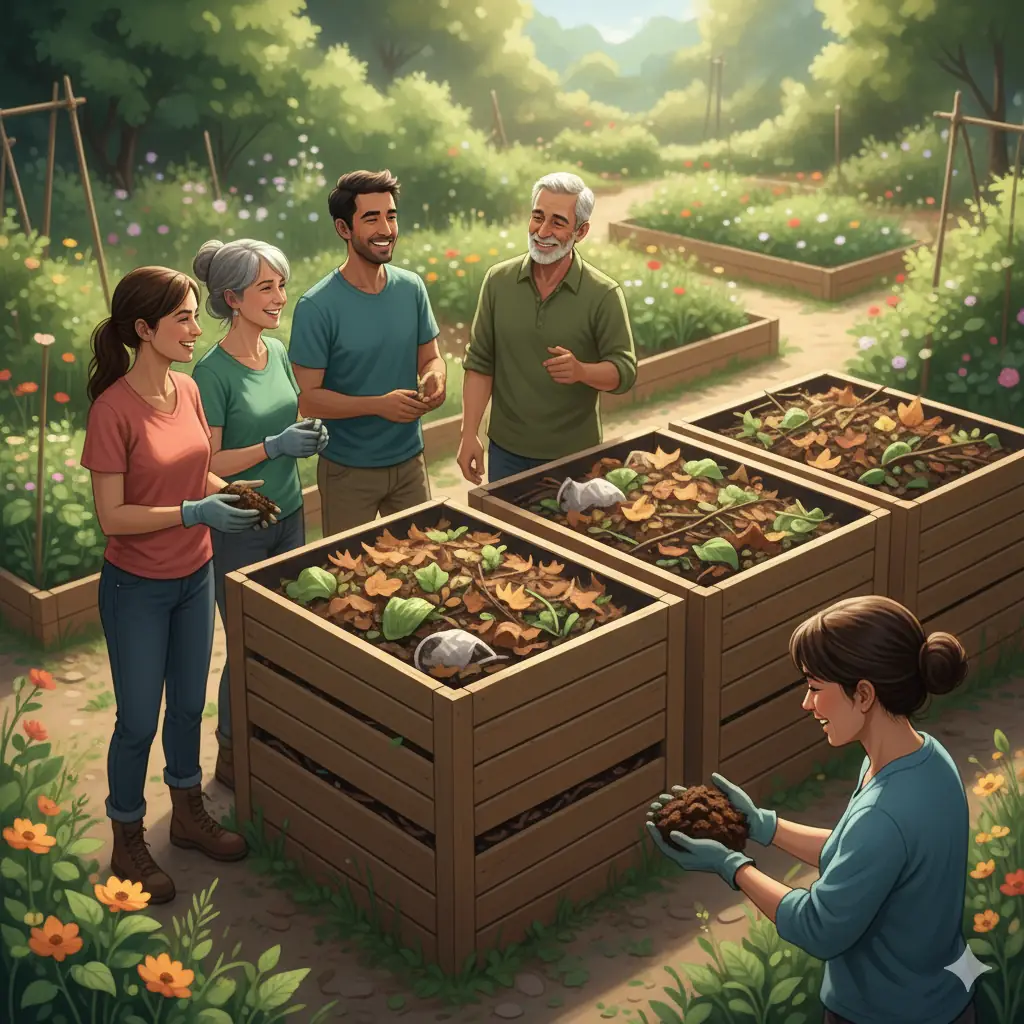

🪴 The Urban Gardener’s Quest for Black Gold
As an urban gardener, you’re constantly juggling ambition and space limitations. We know you want rich, healthy soil, but bulky bags of compost aren’t always practical or budget-friendly, which is where smart composting comes in.
Making your own ‘black gold’ is the most sustainable, cost-effective way to feed your balcony boxes, raised beds, or tiny backyard plots. The challenge isn’t the process itself, but fitting it into a metropolitan setting.
It’s all about finding the right system that respects your neighbors, fits your footprint, and consistently delivers nutrient-dense soil. Let’s dive into how to make composting work, even on a small city scale.
🗑️ Choosing the Right Compact Composting System
Your first decision is selecting a system that suits your space and lifestyle. Urban environments often rule out large open-air piles, so we look to contained methods that are efficient and neat.
Tumblers: Efficiency in Rotation
Compost tumblers are excellent for urban spaces because they are fully sealed, which manages odor and keeps out pests. They are also elevated, meaning they take up vertical space rather than valuable ground area.
To use them effectively, aim for a batch system: fill it up, seal it, tumble daily, and let it cook for a few weeks. The finished compost is easy to access, making the whole process incredibly clean and straightforward.
Worm Composting (Vermicomposting): The Ultimate Indoors Solution
If you have zero outdoor space, or if you live in a very dense apartment complex, vermicomposting is your answer. You use specialized bins filled with moisture and bedding, housing red wiggler worms.
These worms rapidly process food scraps into nutrient-rich castings (worm manure), which are arguably the best soil amendment available. The bins can be kept on a porch, in a kitchen cupboard, or even under the sink, as they are virtually odorless when managed correctly.
Bokashi Composting: Pre-Processing Made Easy
Bokashi isn’t traditional composting; it’s an anaerobic fermentation process that uses a special bran to ‘pickle’ all food waste, including meats, dairy, and oils—things that usually ruin a typical compost pile.
The system uses airtight buckets that take up minimal space. After the fermentation period (about two weeks), the pickled matter needs to be buried in soil to complete the breakdown, which works perfectly if you have raised beds or containers to bury it in.
📏 Small Space Design Considerations
When space is limited, every inch counts. Here’s a quick look at how to optimize your setup:
In urban settings, always look up. Can your tumbler be placed on an unused side yard? Can your worm bin be stacked beneath a potting bench? Utilize vertical shelving or corner spots to keep the footprint minimal while maximizing volume.
Consider the access point for your materials. Place your compost system near the kitchen door or on the balcony you use most often to ensure regular use and easy turning. Convenience is key to consistency.
🍎 Maximizing Your Materials: Browns and Greens in the City
Compost relies on a balance of nitrogen-rich ‘greens’ (food scraps) and carbon-rich ‘browns’ (dry, woody material). In the city, greens are abundant, but browns can be harder to source.
Instead of relying on large amounts of dried leaves (which might be hard to collect), urban gardeners should focus on materials like shredded cardboard, newspaper, and paper towels. These are readily available kitchen discards.
Pro Tip: Always keep a small box of shredded paper near your composter. Whenever you add a bucket of fresh kitchen scraps (‘greens’), immediately cover it with an equal volume of the shredded ‘browns.’ This layering prevents odors and speeds decomposition.
✨ Troubleshooting and Essential Urban Composting Tips
Urban composting requires diligence because issues can quickly affect neighbors or attract unwanted visitors. Here are critical tips for managing a healthy system in close quarters:
Key Management Techniques
- The ‘Chop It Up’ Rule: Always cut or tear your food scraps and brown materials into smaller pieces (no larger than a golf ball). This vastly increases the surface area for microbes, speeding up decomposition and reducing odor risk.
- Monitor Moisture Closely: The pile should feel like a wrung-out sponge—damp, but not soaking wet. Too wet, and it becomes anaerobic (stinky). Too dry, and decomposition stalls.
- Regular Turning: If using a tumbler or standard bin, turn the contents at least twice a week. Aeration introduces oxygen, which is essential for the fast, hot, and odorless process you want.
- Strategic Layering: Never dump a large bucket of food scraps on top and leave it. Always bury fresh scraps in the middle of the existing material and cover them with a layer of dry browns.
If you ever notice a foul, sewage-like odor, it almost always means the pile is too wet and lacks air (too many greens). The immediate fix is to tumble vigorously and add a large volume of dry browns.
The best way to deter pests in urban composting is through heat and exclusion. A properly balanced, working pile generates heat (ideally 130°F+), which is unappealing to pests. Always use a sealed system (like a tumbler or closed bin) and strictly avoid meat, dairy, or oil, which are primary attractants.
By implementing these focused, space-saving techniques, you can easily turn your urban food waste into a rich, free soil amendment. You’re not just gardening; you’re completing the cycle of sustainability right on your own patio or balcony.