

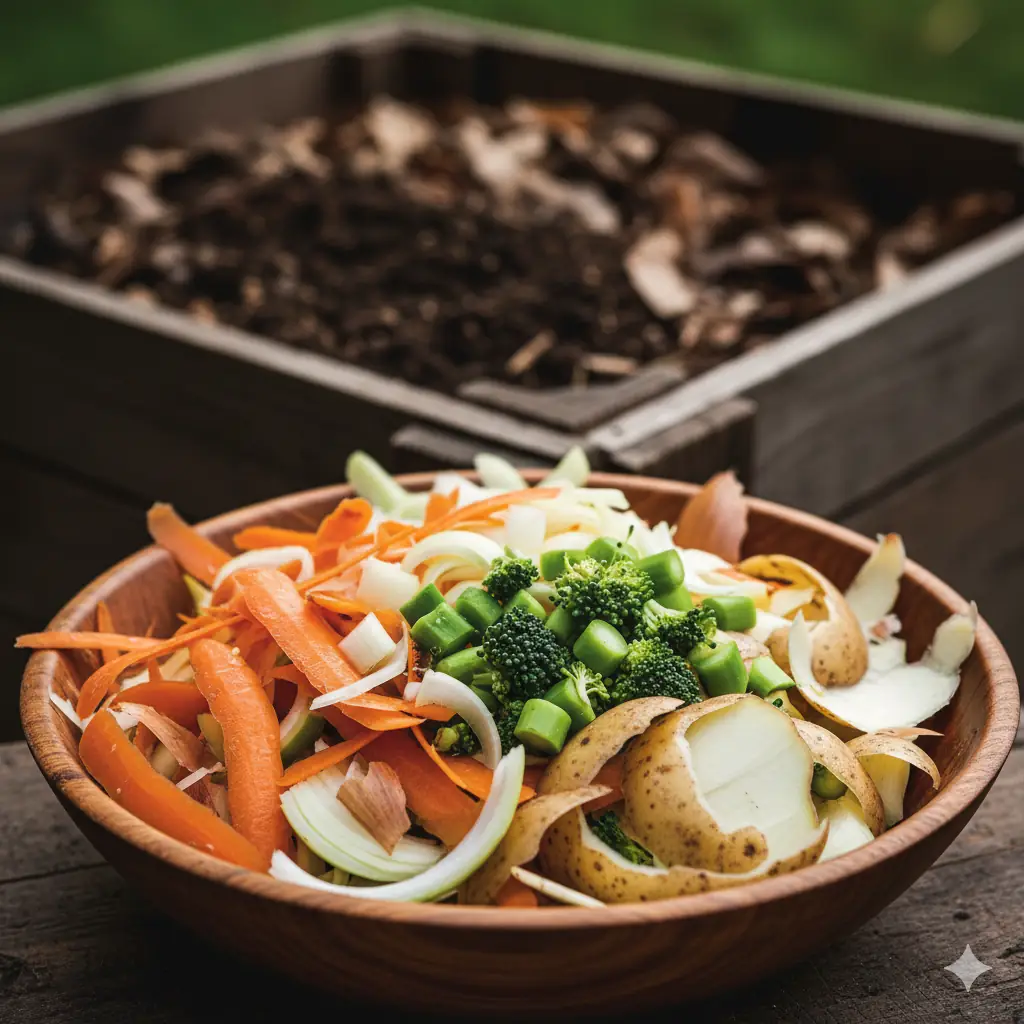

🥕 Kitchen Gold: Why Peels Are Prime Compost Material
For most home composters, kitchen waste—especially vegetable peels—forms the bulk of the nitrogen-rich ‘Green’ materials. It’s the daily, steady stream of fuel that keeps the microbial engine running.
Vegetable scraps are fantastic because they break down quickly, are moisture-rich, and contain the same essential micronutrients that the plants themselves absorbed from the soil.
By composting your peels, you are effectively recycling those vital elements back into your garden, completing the natural nutrient cycle perfectly.
🌟 The All-Star Peels: Easy and Fast Decomposers
Many vegetable scraps are absolute heroes in the compost bin. They decompose quickly and seamlessly, requiring almost no special preparation from you.
Potato and Carrot Peels
These root vegetable peels are thin, soft, and nutrient-dense. Because they are often cut into small pieces during prep, they offer a high surface area for microbes to attack.
They act as excellent activators, providing a quick burst of moisture and nitrogen. Just toss them straight into the pile and cover them with a handful of ‘Browns’.
Leafy Greens and Outer Layers
Any outer cabbage leaves, wilted lettuce, spinach, or broccoli stalks are ideal. They break down extremely fast due to their high water content.
However, be sure to chop very thick broccoli stalks into small chunks to prevent them from becoming woody and slowing down the process.
Squash and Pumpkin Peels
While often thicker, winter squash peels (like butternut or pumpkin) are soft and rich in moisture. The large seeds inside are also welcome, though they may sprout if your pile doesn’t reach high temperatures.
If you’re using a large amount, simply chop the peels into smaller sections before adding them, helping the microbes access the soft interior more easily.
⚠️ Peels that Need Extra Attention
Not all peels are created equal. A few common kitchen scraps require a little bit of preparation or caution to ensure they integrate into your compost smoothly.
Citrus Rinds (The Acid Question)
Orange, lemon, and lime peels are often flagged as potential issues. While composting neutralizes their acidity over time, large pieces of citrus rind are thick and slow to decompose.
To speed things up, chop or mince citrus peels finely before adding them. Use them in moderation, especially if you are vermicomposting, as worms prefer a less acidic environment.
Onion and Garlic Skins (The Smell Factor)
These peels are generally fine, but in large quantities, they can deter earthworms and create very strong, pungent odors, especially if the pile is struggling with aeration.
It’s best to mix them thoroughly into the core of the pile rather than leaving them sitting on top. They decompose fine, but they require good burying.
Waxy and Treated Peels
Avoid composting the peels of conventionally grown produce that often have a waxy coating (like some store-bought cucumbers or apples). This wax is often petroleum-based and can slow decomposition.
If you aren’t sure, it’s safer to stick to organic or home-grown peels, or peel the waxy layer off and discard it separately.
🔪 Prep for Speed: Giving Your Microbes a Hand
The number one rule for fast decomposition is simple: size matters. The smaller the material, the faster the composting process will be.
Think of it this way: your microbial workers don’t have teeth! They can only eat what they can cover. Chopping up peels dramatically increases the surface area for bacteria and fungi to feast on.
- Use a Blender: If you have a huge batch of scraps (e.g., from juicing), run them through a blender with a little water to create a high-surface-area slurry.
- Chop Thick Items: Always chop thick, dense peels like melon rinds or large root vegetable bases into 1-inch chunks or smaller.
🔄 Integrating Peels into the C:N Balance
All vegetable peels are considered ‘Greens’ due to their high nitrogen and moisture content. This means they must be balanced with plenty of ‘Browns’ (carbon) to prevent the pile from becoming slimy or smelly.
Every time you add a batch of kitchen peels, follow it up with a layer of dry, bulky material like shredded cardboard, dry leaves, or wood chips. This simple layering strategy keeps your pile airy and productive.
By treating your vegetable peels not as waste, but as the precious resources they are, you ensure your compost pile remains a powerful, healthy, and high-yielding machine, ready to enrich your soil.