

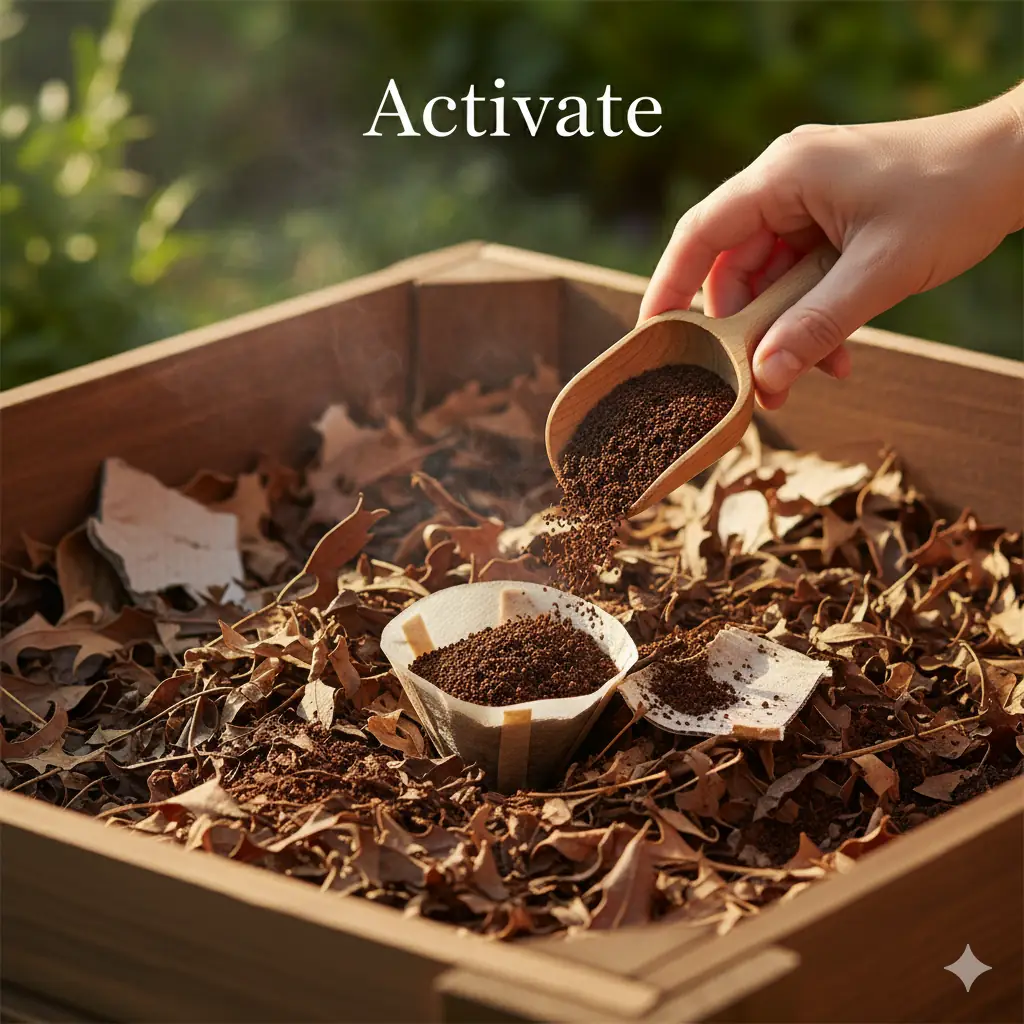

☕ Starting Your Day with Compost Gold
For many of us, coffee grounds are simply morning waste, destined for the trash. But in the world of composting, those grounds are liquid gold—or rather, black gold in the making.
Coffee grounds are packed with essential nutrients and highly valuable organic matter that can supercharge your compost pile and enrich your garden soil.
The short answer is a resounding yes, you absolutely *can* compost coffee grounds safely. However, like any potent ingredient, they must be used correctly to avoid common pitfalls.
🔬 Coffee Grounds: The Compost Superfood
Understanding why grounds are so beneficial helps us use them correctly. They offer two major advantages to the decomposition process.
Nitrogen Powerhouse (The Green Side)
Used coffee grounds have an average carbon-to-nitrogen (C:N) ratio of about 20:1. While they are brown in color and dry in texture, scientifically they behave like a Nitrogen (Green) material in the pile.
This high nitrogen content acts as a powerful activator, heating up the compost pile and fueling the rapid reproduction of beneficial bacteria and fungi. They get the decomposition party started!
Soil Structure & Nutrients
The physical structure of coffee grounds is also a huge plus. They are tiny, dense particles that break down relatively quickly, adding bulk and improving the texture of the finished compost.
Beyond nitrogen, they contain valuable micronutrients like magnesium, potassium, calcium, and phosphorus, all vital building blocks for healthy plants.
⚖️ Safety First: The Balancing Act
The safety concern with coffee grounds usually stems from their high nitrogen content and the potential for compaction. Too much of a good thing can throw your whole system off balance.
The Risk of Compaction
If you dump a large, thick layer of wet coffee grounds onto your pile, they can compact tightly. This creates a dense, oxygen-deprived layer where beneficial aerobic microbes can’t breathe.
The result is a smelly, sour, anaerobic mess that slows down the entire composting process. Think of it like pouring thick mud—it seals the air out entirely.
The Risk of Ammonia Smell
Because they act as a ‘Green,’ adding a disproportionate amount of grounds without balancing ‘Browns’ can lead to a nitrogen overload. This results in the release of ammonia gas, giving your pile that recognizable rotten-egg stench.
🛠️ How to Add Coffee Grounds Safely
The secret to safe composting is proper integration. Treat coffee grounds like any other concentrated nitrogen source—they need surrounding air and carbon.
1. The Spread and Layer Rule
Never add grounds in large clumps. Instead, spread a thin layer over the surface of the compost pile and immediately cover it with a thick layer of carbon (Browns).
Good Browns for this purpose include shredded dry leaves, shredded newspaper, or wood shavings. A 1-inch layer of grounds should be covered by at least 3-4 inches of dry Browns.
2. Mix Them In
If you are adding a significant volume, the best approach is to mix the grounds thoroughly into the existing materials. Use a compost fork or aerator to distribute them evenly throughout the pile.
This ensures they don’t form those detrimental compaction layers and that oxygen remains available to the microbes.
3. Include the Filter
If you use paper coffee filters, toss them right in with the grounds! The filter is a high-carbon (Brown) material that helps balance the high nitrogen of the grounds, making a perfect mini-package of C:N balance.
🌍 Composting Grounds: Pros and Cons
| Benefit (Pro) | Challenge (Con) |
|---|---|
| High nitrogen boosts heat and speed. | High nitrogen requires carbon balance (Browns). |
| Adds structure and beneficial nutrients (Mg, K). | Can easily compact and create anaerobic pockets. |
| Repurposes daily kitchen waste cleanly. | Requires mixing; cannot be added in large clumps. |
| Safe for plants; does not make soil acidic long-term. | Excessive use can initially slow seed germination. |
It’s important to clarify a common misconception: while coffee itself is acidic, used coffee grounds have a near-neutral pH (6.5 to 6.8). They won’t make your finished compost or soil acidic.
🌱 Beyond the Pile: Direct Soil Application
If you don’t have a large compost pile, you can still use coffee grounds safely in your garden. Just remember moderation is key.
As a Top Dressing
Spread a very thin layer (no more than 1/2 inch) of grounds directly onto garden beds or around acid-loving plants like blueberries and rhododendrons. Gently rake or scratch the grounds into the topsoil.
Mixing into Soil
When preparing new soil, mix grounds into the top few inches, ensuring they make up no more than 10-20% of the total volume. This is safest and highly effective.
Coffee grounds are truly one of the most accessible and valuable materials for any composter. By understanding their powerful nitrogen content and practicing good aeration and layering techniques, you can safely and effectively harness their benefits to create the richest soil possible.