

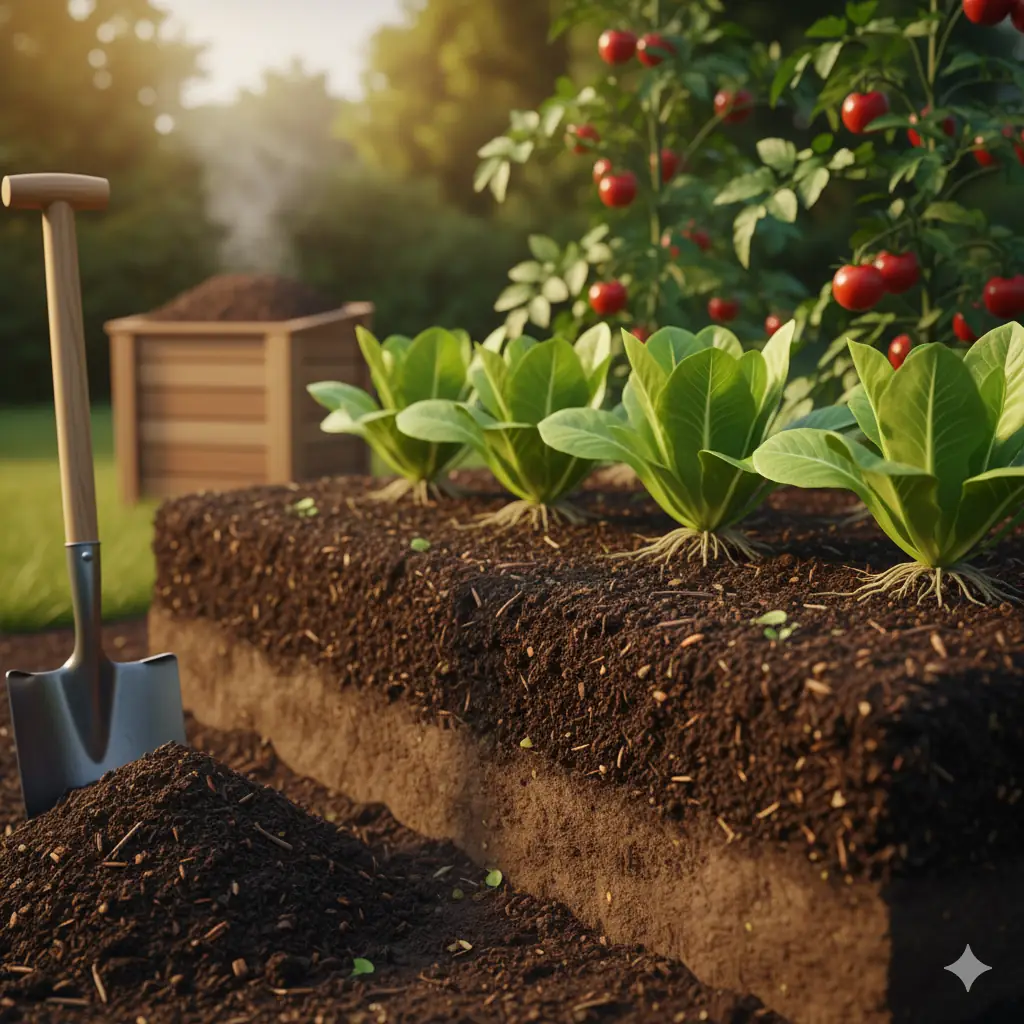

When we talk about sustainable gardening, the conversation inevitably circles back to one humble, yet powerful practice: composting. It’s more than just a way to deal with kitchen scraps; it’s the engine that drives a truly closed-loop, eco-friendly approach to growing food and maintaining landscapes.
Composting allows us to turn what would otherwise be waste into a valuable resource, creating a rich soil amendment often called ‘black gold.’ This single act supports sustainability in ways that commercial fertilizers and store-bought soil simply cannot match.
The Foundation of Sustainability: Soil Health
At its heart, sustainable gardening is about nurturing the soil, not just feeding the plants. If you think of your garden as a savings account, composting is the steady, reliable deposit that keeps the whole system solvent and thriving.
Chemical fertilizers offer a quick, synthetic boost of nutrients, but they don’t improve the soil’s structure or long-term viability. Compost, however, works from the ground up, providing comprehensive, lasting benefits that enhance the entire ecosystem.
How Compost Transforms Soil
Compost is a powerhouse of stable organic matter and beneficial microbiology. When added to your garden beds, it changes the physical and biological characteristics of the soil fundamentally.
- Improves Structure: In heavy clay soils, compost acts like a binding agent, creating air pockets for better drainage. In sandy soils, it acts like a sponge, helping the soil retain essential moisture and nutrients.
- Increases Water Retention: Due to its sponge-like nature, compost allows your soil to hold significantly more water. This means your garden requires less frequent watering, a huge win for sustainability, especially in dry climates.
- Feeds the Soil Web: Compost introduces billions of beneficial bacteria, fungi, and protozoa. These microorganisms are the true workers of the soil, making nutrients available to plants and actively fighting off diseases.
- Slow-Release Nutrients: Unlike fast-acting synthetic feeds, compost releases nitrogen, phosphorus, and potassium slowly, as the organisms continue their work. This provides a steady, balanced diet for plants, preventing the nutrient runoff that pollutes waterways.
When your soil is healthy, your plants are naturally more resistant to pests and diseases, reducing the need for chemical interventions. This holistic approach is the definition of sustainable gardening.
Environmental Impact: Closing the Loop
The benefits of composting extend far beyond your garden fence, creating significant positive impacts on the wider environment. It’s a powerful tool for waste management and climate action.
Waste Diversion and Methane Reduction
The average household throws away a considerable amount of compostable waste, including food scraps and yard trimmings. When this organic matter ends up in oxygen-starved landfills, it decomposes anaerobically (without air) and releases methane gas.
Methane is a greenhouse gas that is far more potent than carbon dioxide in warming the planet over a short period. By composting, we allow organic material to break down aerobically (with air), converting carbon into stable humus instead of harmful methane, directly reducing our carbon footprint.
Reducing the Need for Industrial Production
If you make enough compost at home to satisfy your gardening needs, you significantly reduce the demand for several resource-intensive industries:
- Fertilizer Manufacturing: The production of synthetic nitrogen fertilizer is an extremely energy-intensive process, relying heavily on fossil fuels.
- Peat Mining: Many potting mixes contain peat, a non-renewable resource harvested from fragile wetland ecosystems. Compost offers a superior, renewable alternative.
- Transportation: Using homemade compost means fewer trucks hauling bags of soil and fertilizer from distribution centers to stores, saving on fuel and emissions.
In summary, composting delivers environmental savings at three distinct points: diverting waste, reducing greenhouse gases, and minimizing new resource consumption.
The Economic Benefits: A Sustainable Budget
While the environmental benefits are compelling, let’s not overlook the financial perks. Sustainable practices often save money, and composting is a prime example.
| Composting Benefit | Savings Achieved By |
|---|---|
| Reduced Input Costs | Eliminating the need to purchase bagged fertilizer and soil amendments. |
| Lower Water Bills | Compost-rich soil retains water far better, reducing irrigation frequency. |
| Fewer Replacements | Healthier, stronger plants naturally resist pests and disease, reducing losses and replacement costs. |
| Waste Fees | Less trash volume means potential savings on waste collection fees. |
Compost essentially allows you to transform items you would have paid to throw away (food scraps) into the single most valuable resource for your garden. It’s the ultimate form of resourcefulness.
Getting Started: The Compost Commitment
For sustainable gardening, the commitment to composting is non-negotiable, but the process doesn’t need to be complicated. You can start small, perhaps with a simple compost tumbler or a pile in the corner of your yard.
The key is balancing your ‘greens’ (nitrogen-rich items like food scraps and fresh grass) and ‘browns’ (carbon-rich items like dried leaves and shredded paper). Keeping the mix moist and turning it regularly ensures a quick, odor-free process.
Even if you only compost your coffee grounds, tea bags, and banana peels, that’s hundreds of items diverted from the landfill and dozens of pounds of valuable organic matter added back to your soil over the course of a year. Every bit counts!
Conclusion: The Heart of the Garden
Composting truly is the heart of a sustainable garden. It elegantly connects the kitchen back to the garden, turning yesterday’s waste into tomorrow’s bounty. It ensures the health of your soil, protects the climate by mitigating methane, and saves you money on supplies.
By making the choice to compost, you are doing more than just gardening; you are actively participating in the cycle of regeneration. It’s a foundational step that promises healthier plants, a cleaner planet, and a deeper connection to the food you grow.