


🥕 Why Compost is the Vegetable Gardener’s Secret Weapon
For anyone serious about growing healthy, high-yielding vegetables, compost is more than just a soil amendment—it’s foundational. Often called ‘black gold,’ finished compost is arguably the best natural fertilizer and soil conditioner you can provide.
Unlike synthetic fertilizers, which offer a quick, temporary nitrogen spike, compost delivers a slow, steady stream of essential nutrients while simultaneously improving the physical structure of your garden soil.
It’s a sustainable cycle: you feed your compost pile with kitchen and yard scraps, and in turn, the compost feeds your soil, leading to stronger plants and more successful harvests. It’s truly a win-win scenario.
🔬 The Science of Soil Improvement
When you add compost to your vegetable patch, you’re not just providing nutrients; you’re revitalizing the entire soil ecosystem. This is critical because vegetables have high demands on soil health.
Boosting Soil Structure and Drainage
Compost acts like a sponge, especially in difficult soils. In heavy clay soil, it creates aggregation, breaking up the density and improving drainage. Conversely, in sandy soil, it adds body, helping the soil retain essential water and nutrients.
This improved structure is vital for root vegetables like carrots and potatoes, allowing them to expand easily and preventing the soil from becoming compacted after heavy rains or watering.
Increasing Nutrient Retention
Finished compost is rich in humic substances that have a high Cation Exchange Capacity (CEC). In simpler terms, this means compost is excellent at holding onto positively charged nutrient ions, like calcium, potassium, and magnesium.
By using compost, you ensure that the valuable minerals you add to your garden are held in the root zone, ready for your plants to use, rather than being washed away by irrigation.
🌱 Application Insight: The Hidden Power of Microbes
A tablespoon of healthy compost contains billions of beneficial microbes, including bacteria, fungi, and protozoa. When you incorporate it into your garden, you are essentially inoculating your soil with these workers. They help cycle nutrients, suppress disease, and even break down toxins, creating a powerful defense system for your growing vegetables.
🗓️ Timing is Everything: When to Apply Compost
Knowing when to apply compost is nearly as important as knowing how to make it. The goal is to provide the maximum benefit at key stages of your vegetable garden’s lifecycle.
The Pre-Season Soil Preparation
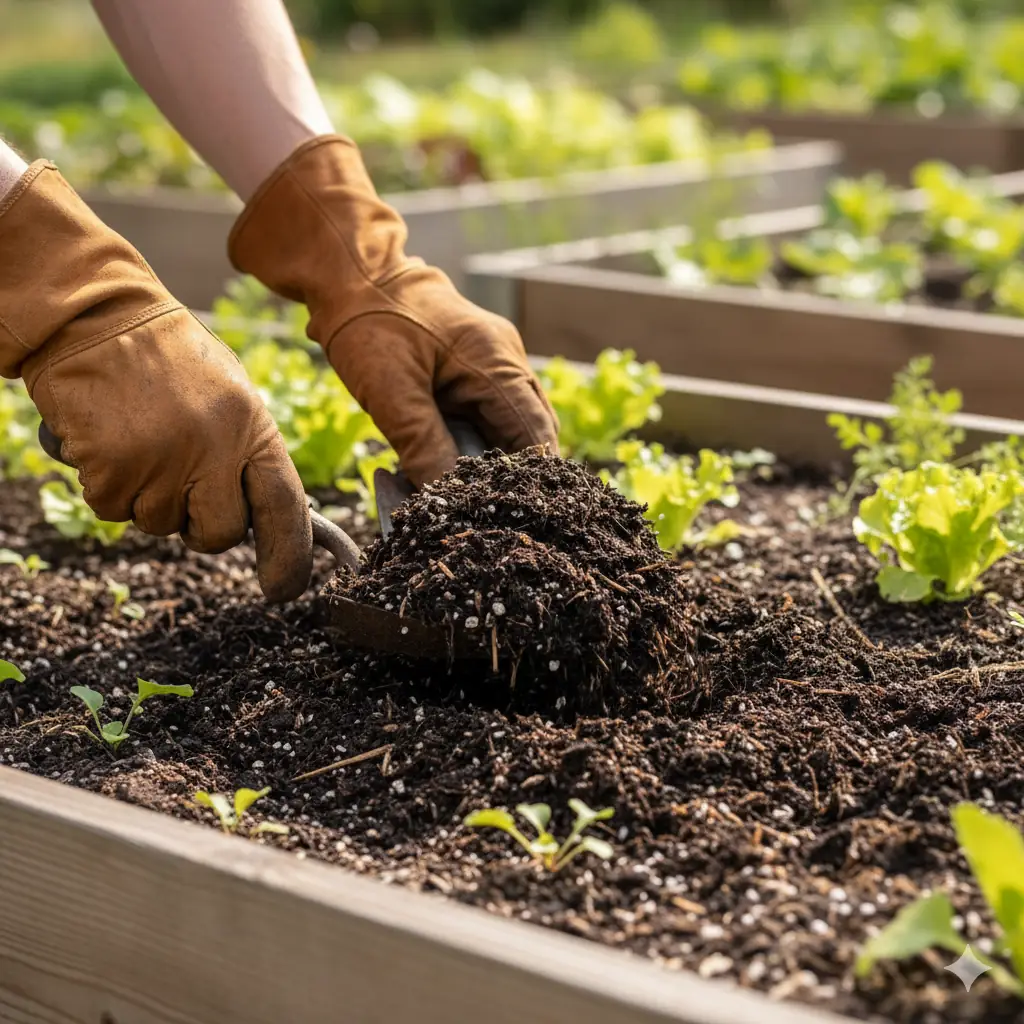
The single best time to apply compost is just before planting in the spring. As you prepare your beds, spread a generous layer—typically 2 to 3 inches—over the soil surface and gently work it into the top 6 to 8 inches.
This foundational layer establishes the ideal environment for tender seedlings or transplants, ensuring a nutrient-rich and well-aerated home for their developing root systems.
The Mid-Season Side Dressing
High-demand plants, especially heavy feeders like tomatoes, corn, squash, and brassicas, can quickly deplete the surrounding soil. They often benefit from a mid-season boost.
About halfway through the growing season, apply a 1-inch thick layer of compost around the base of these plants. This technique, called side dressing, refreshes the nutrient supply exactly when the plants are focusing on producing flowers and fruit.
🖐️ Best Methods for Compost Application
There are several effective ways to integrate compost into your vegetable garden, depending on your needs and how finished your compost is.
Broadcasting and Tilling
For establishing new garden beds or preparing large areas, the simplest method is broadcasting the finished compost over the entire area. While incorporating it lightly (tilling) is helpful, avoid deep tilling, which disrupts the natural soil layers and microbial networks.
Top Dressing and Mulching
This is the least disruptive method. Simply spread a layer of compost on the soil surface around established plants. This acts as a slow-release fertilizer and also functions as a mulch, suppressing weeds and conserving moisture.
Top dressing is perfect for perennial vegetables or those already growing, as you avoid disturbing their roots.
Making Compost Tea
For a quick nutrient boost, especially during times of plant stress or high heat, some gardeners use compost tea. This involves soaking finished compost in water for a day or two and then applying the resulting nutrient-rich liquid to the plants’ leaves or the soil.
Compost tea is a fantastic supplement, but it should not replace the structural benefits of applying solid compost.
🚫 What NOT to Compost for Vegetable Gardens
When aiming for food safety and garden health, a few materials should strictly be avoided in your compost pile, or at least handled with extreme caution.
- Meat, Dairy, and Fats: These materials attract pests (rodents, raccoons) and can introduce harmful human pathogens. Keep them out of your food-garden compost.
- Diseased Plants: Avoid adding plants showing signs of fungal, bacterial, or viral diseases, unless you are certain your pile is consistently reaching hot composting temperatures ($140^{\circ}\text{F}+$) to kill them off.
- Weeds that have gone to seed: Unless you maintain a hot pile, the seeds will survive the composting process and return to infest your vegetable beds.
Composting for a vegetable garden is an empowering process that transforms kitchen waste into tangible, beautiful rewards. By treating your soil to a regular dose of homemade compost, you’re investing in long-term soil fertility, pest resistance, and ultimately, a more productive and delicious harvest every season.