

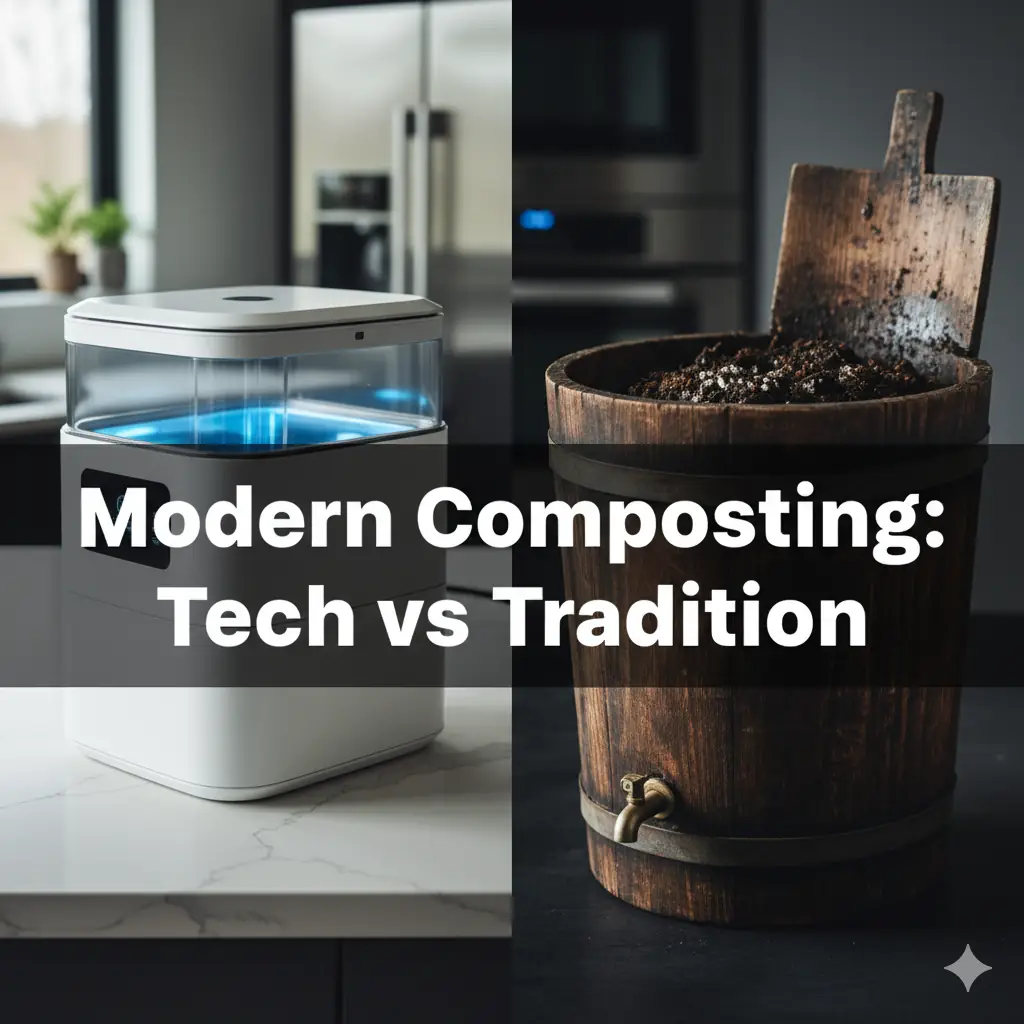

Introduction: Composting Enters the Digital Age
For centuries, composting has been a low-tech hero of sustainability, turning organic scraps into rich soil amendment. While the basic science remains the same, the method is rapidly changing. We are now seeing a true fusion of gardening tradition and modern technology.
The future of home composting isn’t just about big bins in the backyard anymore; it’s about sleek kitchen appliances and smart sensors. This evolution is driven by the need to manage waste in urban settings, eliminate odors, and make the process incredibly easy for busy households. It’s about bringing the circular economy right into your kitchen.
The Rise of Smart Composting Appliances
The Countertop Revolution
Perhaps the most significant change is the introduction of smart, electric countertop composters. These devices look more like bread makers than traditional bins, and they radically accelerate the breakdown process. They use heat, grinding, and often specialized microbes to reduce food waste volume by up to 80-90% in just a few hours.
Brands like Lomi or Mill are leading this charge, making composting possible for apartment dwellers or anyone without outdoor space. They don’t produce fully mature compost in a day, but they create odorless, dehydrated ‘food grounds’ or pre-compost that is easy to store and integrate into soil or garden beds later.
IoT Integration and Real-Time Monitoring
The ‘smart’ in smart composting comes from the integration of IoT (Internet of Things) technology. These systems are equipped with sensors that constantly monitor critical parameters like temperature, moisture, and aeration levels inside the bin.
This real-time data is often relayed to a smartphone app, giving you precise feedback on your compost’s health. It’s like having a helpful, tiny soil scientist guiding your process, ensuring optimal conditions are maintained automatically and reducing the guesswork that often discourages beginners.
A great example is a smart bin that alerts you: “Moisture level too high! Please add two cups of dry shredded paper.” This simple, actionable advice replaces the manual labor and guesswork of traditional methods.
New Methods and Microbial Science
The future isn’t just electric; it’s also biological, with sophisticated takes on existing anaerobic and microbial systems gaining popularity.
Bokashi: Anaerobic Fermentation
Bokashi, a Japanese method, is becoming increasingly relevant for modern households. Unlike traditional aerobic composting, Bokashi uses a special bran inoculated with Effective Microorganisms (EM) to anaerobically ferment kitchen scraps in an airtight container.
This process is fast, typically taking only two weeks, and has the huge advantage of being able to handle foods traditional composting avoids, like meat, dairy, and oily foods. It results in a ‘pre-compost’ that is then buried or added to a regular compost pile to finish decomposing.
Advanced Vermicomposting Setups
Even worm composting (vermicomposting) is getting an upgrade. New flow-through worm bins and modular systems are designed to minimize labor and maximize worm health.
These designs allow for continuous feeding at the top and easy harvesting of nutrient-dense worm castings from the bottom, separating the worms automatically. This makes large-scale indoor vermicomposting cleaner and more efficient than ever.
The Broader Impact: Decentralization and Policy
The push for advanced home composting systems is fueled by significant shifts in policy and consumer behavior that point towards a decentralized waste model.
Mandates and the Circular Economy
Many cities and regions are enacting mandates to divert organic waste from landfills, recognizing the vast amount of methane produced by food scraps. This top-down regulatory pressure encourages both municipal collection programs and, crucially, home-based solutions.
As governments and corporations embrace the circular economy, home composting is seen as an essential citizen action. Every scrap diverted at home is less cost, less infrastructure burden, and less carbon footprint for the city.
Community and Digital Connection
Apps are emerging that connect individual composters to the larger community. Apps like ShareWaste or MakeSoil allow users who don’t compost at home to locate neighbors, community gardens, or drop-off hubs willing to take their food scraps.
This digital connection transforms composting from an isolated chore into a community effort, ensuring that waste is diverted even from apartments or homes without a bin. It creates a robust, distributed network of waste recyclers across urban landscapes.
The Future is Accessible, Fast, and Clean
Ultimately, the future of home composting is about removing barriers. Traditional composting can be slow, sometimes smelly, and often requires specific outdoor space and knowledge.
New technologies are addressing these concerns head-on, offering fast, odorless, and small-footprint options that fit into any modern lifestyle. This accessibility means composting is moving from a niche hobby to a mainstream, daily part of waste management.
Whether you choose a smart electric dehydrator, a tidy Bokashi bucket, or a digitally monitored traditional bin, the trend is clear: getting started is easier than ever. The choice of which method you use will simply depend on how much you love a little garden chore versus how much you love high-tech automation. Either way, the planet wins.