


🍋 The Composting Controversy: Citrus Under the Microscope
For years, home composters have heard conflicting advice about citrus peels. Are they too acidic? Will they kill the worms? Should they be tossed in the trash instead?
The good news is that citrus peels—lemon, lime, orange, and grapefruit—are perfectly compostable. They are rich in nitrogen, trace minerals, and moisture, making them a valuable ‘Green’ material.
The key, as with most composting questions, is preparation and moderation. By handling their unique properties correctly, you can safely integrate them into any backyard system.
🔬 Debunking the Acidity Myth
The primary concern about citrus is acidity. While fresh citrus juice and peels are acidic, the composting process itself is an incredible neutralizer.
Compost Buffers Acidity
As the microbes actively break down organic matter, they naturally regulate the pH of the pile. The finished compost will be stable and near-neutral, regardless of the small amount of citrus peels added.
Think of it like adding a squeeze of lemon to a huge pot of soup—the flavor change is minimal. The overall volume of your pile buffers the acidity effectively.
The Real Concern: Thickness and Oils
The true issues are structural and aromatic: citrus rinds are thick and take a long time to decompose, and their oils (limonene) can temporarily deter sensitive composting worms.
🛠️ Preparation is Everything: Making Peels Compost-Ready
To ensure citrus peels break down as fast and efficiently as potato or carrot peels, you need to reduce their density and surface area.
1. Chop Them Small
The waxier, thicker rinds of oranges and grapefruits can take months to decompose if tossed in whole. Microbes can only consume what they can cover.
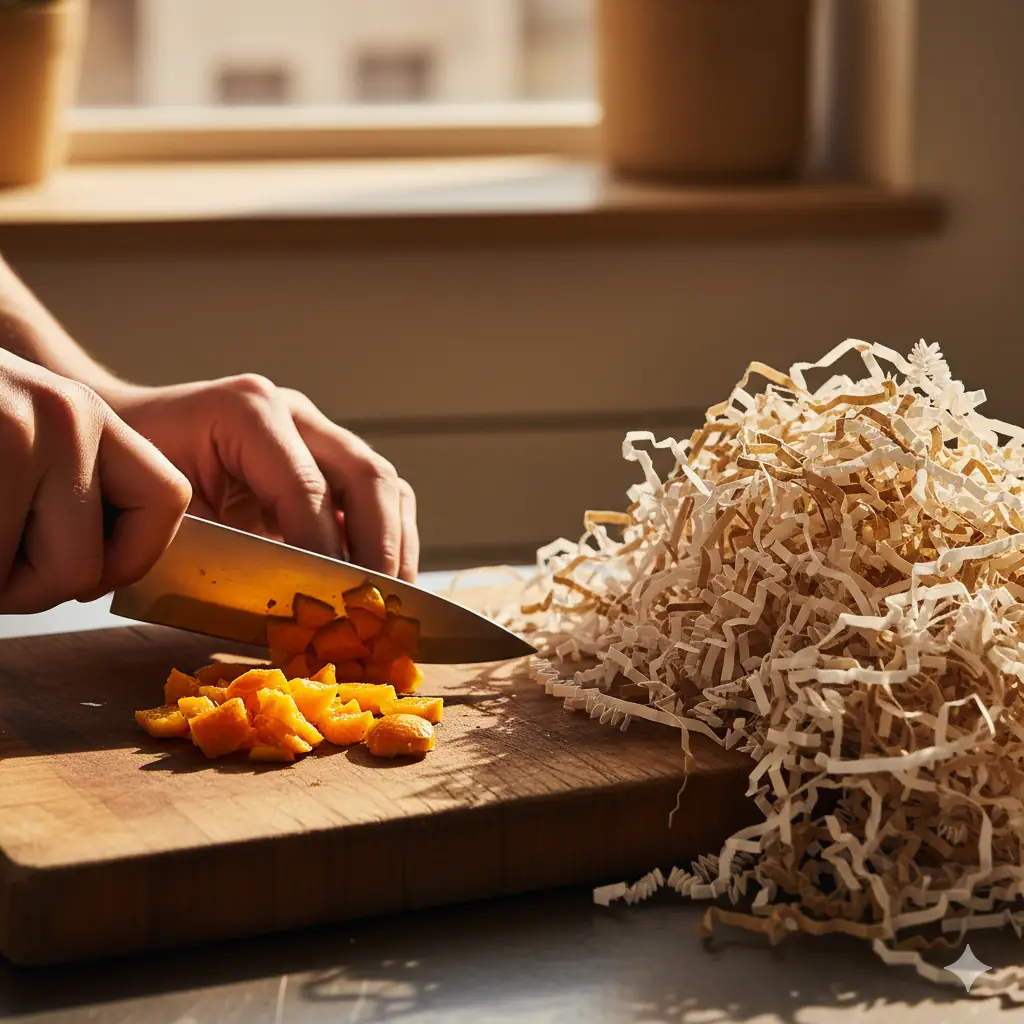
Always chop, mince, or run the citrus peels through a food processor or blender before adding them. Aim for pieces no larger than one or two inches for faster breakdown.
2. Balance with Browns
Citrus peels, being wet and high in nitrogen, count as a ‘Green’ material. They must be balanced with plenty of ‘Browns’ (carbon) to prevent the pile from going anaerobic or smelling sour.
When you add your chopped citrus, immediately cover and mix it with a generous scoop of dry leaves, shredded paper, or wood shavings. This neutralizes odor and soaks up excess moisture.
🐛 Special Note for Vermicomposting (Worms)
If you are composting with Red Wiggler worms, extra caution is warranted. Worms prefer a neutral pH, and too much citrus can make their environment unpleasant.
The Vermiculture Rule: Add citrus peels sparingly—no more than 10-15% of the total food waste added over a long period. Make sure the peels are buried deep in the bedding and are thoroughly chopped.
If you have a large volume of citrus, it’s safer to add it to a traditional, hot outdoor bin rather than your delicate worm farm.
🚫 What to Watch Out For
While the fruit itself is fine, you should avoid citrus peels that have been sprayed or treated with preservatives or fungicides, which is common with non-organic supermarket varieties.
If you suspect the peels have heavy wax or chemical treatments, it’s safer to skip them. Otherwise, a quick rinse under water is usually sufficient for organically grown citrus.
Tips for Composting Citrus:
- Freeze Scraps: If you generate citrus slowly, freeze the peels until you have enough to justify a big chopping/mixing session.
- Use as Odor Control: A small amount of citrus juice or peel can actually be used to briefly mask bad odors in a *sick* pile, though this doesn’t fix the underlying lack of aeration.
- Compost Tea: Citrus peels should not be used as the primary ingredient in compost tea, as the concentration of oils can be too high for a foliar spray. Stick to high-quality finished compost.
🎉 The Sustainable Payoff
By taking a few extra minutes to prep your orange and lemon peels, you gain a valuable nitrogen source for your compost and ensure that one less item ends up in a landfill, where it would contribute to methane production.
Don’t be afraid of the citrus controversy! With good chopping and proper carbon balance, these scraps are an excellent, safe addition to your home composting system.