

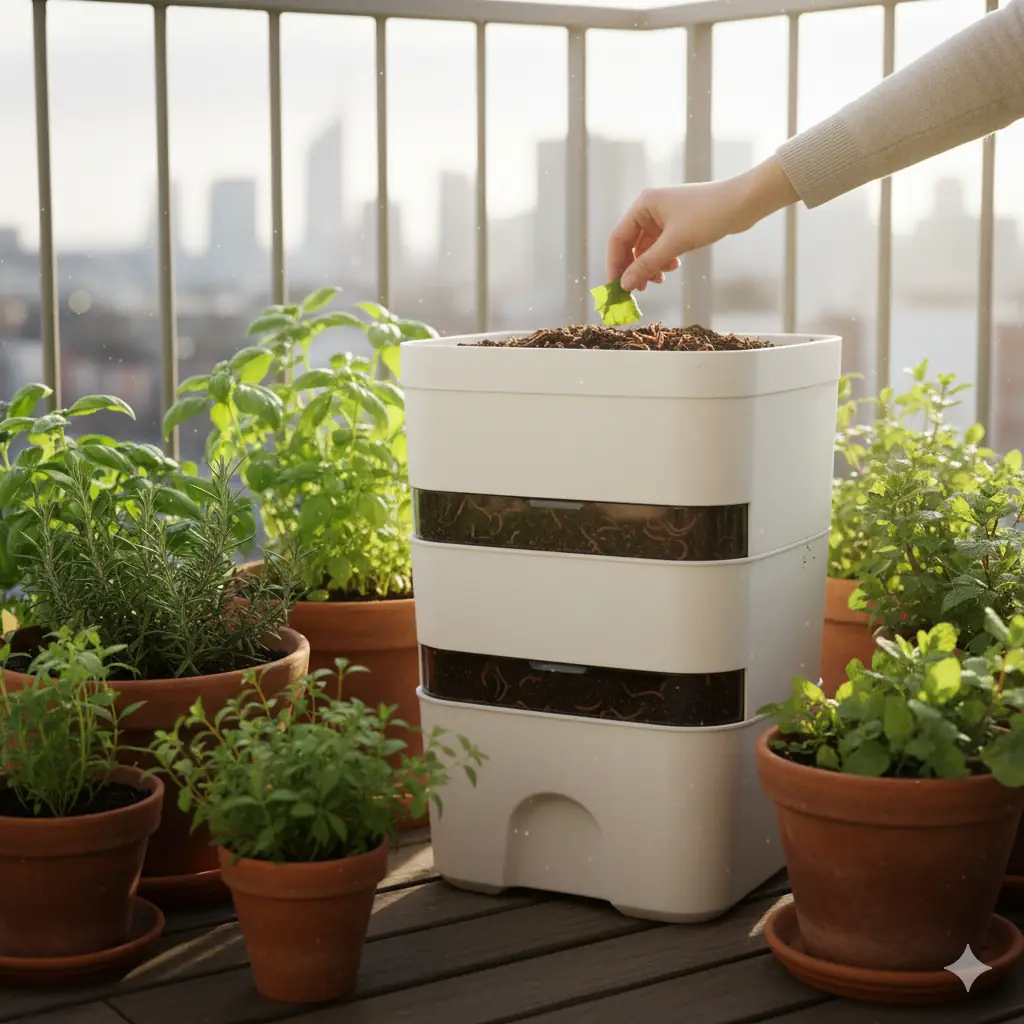

🏙️ Making Compost Work in the City (or Suburbs)
If your gardening space is limited to a small apartment balcony or a tiny patio, the idea of composting can seem impossible. Traditional outdoor bins require space, and the risk of odors or pests is simply too high when your neighbors are just a few feet away.
However, modern composting methods are perfectly suited for urban environments. We don’t need large piles; we need efficient, sealed, and controlled systems that handle typical household food waste.
By focusing on the right method and strict management, you can easily turn your kitchen scraps into valuable fertilizer right where you live, without hassle or smell.
🌱 The Indoor/Balcony Champions: Two Best Methods
When space, smell, and pest control are your biggest concerns, two methods stand out as the undisputed champions for balcony composting: Vermicomposting and Bokashi.
Method 1: Vermicomposting (Worm Power)
Vermicomposting uses specialized composting worms, typically Red Wigglers, in a tiered, contained bin. The worms eat your food scraps and produce nutrient-rich ‘castings’—the finished fertilizer.
- Small Footprint: Worm bins are vertical and compact, easily fitting into a corner of a small balcony.
- Odor Control: A healthy worm bin, fed correctly and maintained with bedding (shredded paper/coconut coir), is virtually odorless.
- Waste Type: Perfect for fruit and vegetable scraps, coffee grounds, and paper. Avoid meat, dairy, and oils, as these can harm the worms and cause odors.
Method 2: Bokashi Composting (Fermentation)
Bokashi is an anaerobic (airless) system that ‘pickles’ or ferments all your food waste—including meat and dairy—using a special inoculated bran.
- Airtight Seal: Since the bucket is sealed to allow fermentation, there are no foul odors during the 2-week processing period.
- Complete Waste Diversion: It handles all food waste, which is a massive benefit in urban settings where landfill access is restricted.
- The Finish Line: The material needs to be buried in soil for final breakdown. You can use large containers or integrate it into balcony planters.
Insight Box: While Bokashi processes all food waste, Vermicomposting immediately yields usable fertilizer (castings). A combination of both methods often works best for complete zero-waste living.
⚖️ Essential Management Strategies for Balcony Success
No matter which method you choose, success on a balcony relies heavily on strict management to control moisture, smell, and pests.
1. Odor Control is Air Control (or Lack Thereof)
If you choose Bokashi, the process is sealed, so you only need to worry about briefly draining the liquid. If you choose Vermicomposting, smells usually mean the bin is too wet or you’ve overfed the worms.
Always add dry carbon bedding (like shredded newspaper or coconut coir) whenever you add wet food scraps to absorb moisture and maintain a neutral smell.
2. Pest Prevention is Non-Negotiable
The biggest pest risk on a balcony is fruit flies. They are attracted to exposed, wet food waste. The fix is simple and strict:
- Bury All Scraps: Always bury new food scraps completely under the worm bedding (vermicomposting) or under the bran (Bokashi).
- Maintain Dry Layer: Keep a thick, 2-3 inch layer of fresh, dry bedding on the surface of your worm bin. This acts as a physical barrier against flies.
3. Temperature Management is Critical
Balconies can experience extreme temperature swings, especially in direct sunlight or freezing winter conditions. Temperature control is vital, especially for worms.
In summer, place the bin in the shadiest corner. In winter, insulate the bin with blankets or place it temporarily against an interior wall of the apartment to prevent freezing.
✨ Using the Finished Product
The goal of balcony composting is to produce ‘black gold’ that you can actually use in your small space.
For Vermicompost (Castings)
Worm castings are incredibly potent. Mix them directly into the potting soil of your balcony planters and herb gardens (about 1 part castings to 4 parts soil). You can also make a gentle ‘compost tea’ from the castings for liquid feeding.
For Bokashi Pre-Compost
Since the fermented Bokashi material is acidic, it must be buried. Dig a trench in a large planter or dedicated soil bucket, bury the material, cover it, and leave it for two weeks to neutralize before planting over it.
📝 Your Balcony Composting Roadmap
Start your small-space composting journey with these steps:
- Assess: Choose the best method (Bokashi or Vermicompost) based on your willingness to manage worms and the type of food waste you generate.
- Setup: Purchase or build a compact, airtight bin and locate it in the most temperature-stable spot on your balcony.
- Balance: Always pair wet food waste with dry carbon material (bran or bedding).
- Bury: Never leave food waste exposed to prevent flies and odors.
- Harvest: Use your finished product to fertilize your balcony herbs and container vegetables, completing your urban cycle.
Composting on a small balcony proves that sustainable living isn’t limited by square footage. With the right technique, you can easily manage your waste, enrich your container garden, and enjoy the benefits of homemade fertilizer, right outside your door.