


✨ The Final Step: Unlocking Your Compost’s Power
After all the waiting, turning, and balancing of browns and greens, you finally have it: beautiful, dark, earthy compost. This ‘black gold’ is the best gift you can give your garden.
Compost isn’t just fertilizer; it’s a total soil conditioner. It improves drainage in clay soil and helps sandy soil hold onto water, creating the ideal environment for roots.
However, simply dumping a pile of compost on your flower bed isn’t the most effective method. We need a strategy—the right ratio and the right technique—to ensure your plants get the maximum benefit.
🔬 Before You Blend: Is Your Compost Ready?
Before any mixing happens, it’s vital to confirm your compost is fully finished. Using unfinished or ‘hot’ compost can actually damage roots by drawing out nitrogen from the soil during its final breakdown phase.
The Look and Feel Test
A finished compost pile should be uniform in color (deep brown/black), crumbly, and have a rich, earthy smell. You should no longer be able to identify the original materials, like banana peels or leaves.
- Ready: Dark, crumbly, smells like earth.
- Not Ready: Contains recognizable scraps, smells like ammonia, and feels slimy or hot.
If it’s not ready, give it a few more weeks to cure. Patience now prevents problems later!
📏 The Golden Ratio for Mixing
Compost is powerful, but you shouldn’t use it as 100% of your planting medium. Think of it like a vitamin supplement—essential, but not the main meal.
The ideal ratio depends slightly on your existing soil quality and what you are growing, but for general garden beds and raised beds, aim for these guidelines:
General Bed Amendments (Topdressing or Tilling)
When incorporating compost into an existing, established garden bed, a depth of 1 to 3 inches across the surface is usually perfect. This translates to roughly a 25% compost to 75% native soil ratio in the top layer.
For example, if you are amending a square yard of soil, you would spread 3 inches of compost and then mix it into the top 9 inches of native soil.
New Raised Beds or Containers
For brand-new planting areas, you need a richer mix. A great starter blend is 50% native soil or topsoil, 30% compost, and 20% drainage material (like perlite or sand, depending on needs).
This higher compost ratio is excellent for giving seedlings a nutrient boost and establishing a deep, healthy root system from day one.
🛠️ Application Techniques: How to Mix It In
How you blend the compost matters, as different plants and areas require different strategies.
1. The Topdressing Method (The Easiest Way)
This is the least disruptive method, ideal for established perennial beds, lawns, or around existing shrubs and trees. It’s essentially like giving your soil a slow, steady feed.
Simply spread a thin layer (about half an inch) of finished compost over the soil surface in the spring or fall. Let nature do the mixing as rain and watering carry the nutrients downward.
This method works wonders for improving the overall soil structure over several seasons without disturbing delicate root systems.
2. The Tilling Method (For New Beds)
If you are creating a brand new garden bed or amending a poor patch of soil heavily, tilling is the way to go. This ensures deep, uniform incorporation.
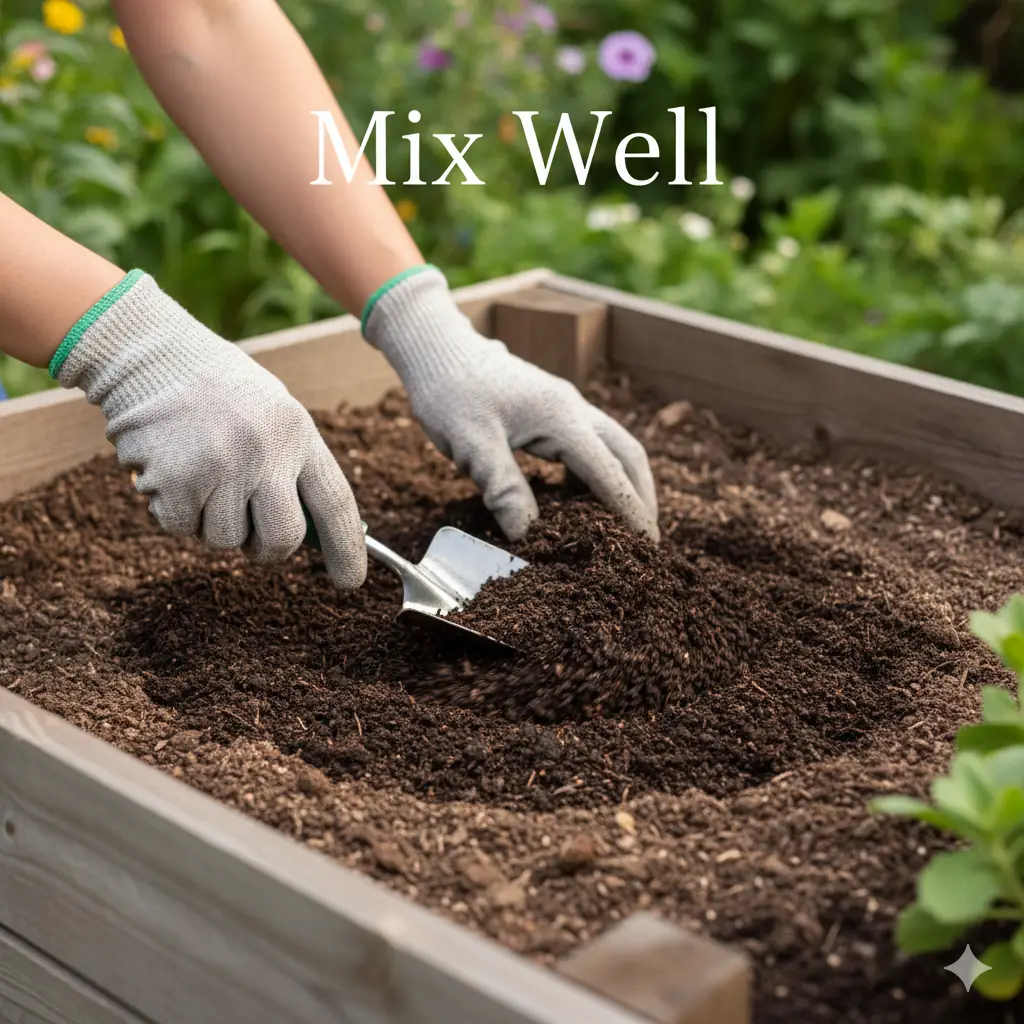
First, spread your measured layer of compost over the area. Then, use a garden fork, tiller, or shovel to mix the compost thoroughly into the top 6 to 12 inches of the native soil.
The goal is a uniform, dark blend—not layers of separate materials. You want the roots to access those nutrients immediately and consistently.
3. Side Dressing (The Targeted Boost)
This technique is perfect for heavy feeders like tomatoes, corn, or squash mid-season. It gives them a concentrated nutrient boost when they need it most.
Dig a small trench or ring around the plant, about 6–8 inches from the stem, avoiding the main root zone. Fill that space with compost and then cover it with soil.
Watering helps the nutrients leach directly into the root zone, acting like a targeted slow-release fertilizer.
💡 Post-Mixing Care and Tips
The work doesn’t stop once the compost is mixed. Good soil health is an ongoing process.
- Watering After Mixing: Always water the area well after incorporating compost. This helps settle the soil and begins the process of releasing the nutrients for your plants to absorb.
- Soil Testing: If you are unsure of your native soil quality, a simple soil test can confirm exactly what ratios you need. It helps you decide if you need more compost, or perhaps another amendment like lime.
- Frequency: Most established gardens only require a good application of compost once per year, typically in the spring before planting, or in the fall to rest and recharge the beds over winter.
Mixing your hard-earned compost into your garden soil is incredibly rewarding. It’s the final step in a truly sustainable, healthy gardening cycle.
By following these simple ratios and techniques, you ensure that every inch of your garden benefits from the balanced, nutrient-rich goodness you created. Happy planting!