


📰 From Filing Cabinet to Fertile Soil: The Paper Connection
We often think of composting materials as strictly garden or kitchen waste, but one of the best ingredients for a balanced pile often comes straight from your home office: shredded paper.
That stack of junk mail, old bills, or newspaper clippings that you run through the shredder isn’t trash; it’s a high-value carbon resource. It’s a perfect ‘Brown’ material that can stabilize and supercharge your decomposition process.
Incorporating shredded paper correctly is an easy way to ensure your pile never smells and maintains that crucial balance needed for ‘hot’ composting. Let’s look at how to use this resource effectively.
🔬 The Science of Shredded Paper
In composting terms, paper is almost pure carbon. This makes it an essential ingredient for balancing out the nitrogen found in kitchen scraps and fresh grass clippings.
The Carbon Advantage
Paper, particularly cardboard and plain newspaper, has a very high Carbon-to-Nitrogen (C:N) ratio (often 170:1 or more). This massive carbon content makes it the perfect buffer against nitrogen overload.
When you add nitrogen-rich ‘Greens’ (like fruit waste), following up with shredded paper prevents the excess nitrogen from converting into smelly ammonia gas. It acts like a dry sponge for nitrogen.
Structure and Absorption
Shredded paper is also excellent because of its physical properties. Its light, airy structure helps maintain porosity in the pile, ensuring crucial oxygen can reach the center and preventing compaction.
Additionally, it’s highly absorbent, making it the perfect material for soaking up excess moisture from wet food scraps or heavy rain, which helps prevent sour, anaerobic smells.
🚫 What Kind of Paper to Use (And What to Skip)
While most paper products are compostable, quality matters. Choose the cleanest, most basic paper whenever possible.
The Best Choices:
- Plain Newspaper: Excellent source of carbon; modern inks (soy-based) are generally safe.
- Brown Cardboard: Great bulking agent; tear or shred into small pieces.
- Office Paper/Junk Mail (Shredded): Perfect for balancing kitchen scraps.
- Paper Towels/Napkins (Unbleached/Clean): Good for soaking up grease and moisture, provided they haven’t been used with harsh chemicals.
The Items to Avoid:
Skip these materials as they either slow down decomposition or introduce undesirable substances into your finished compost.
- Glossy Magazines/Brochures: Heavy coatings and high-pigment inks decompose poorly and can introduce heavy metals or chemicals.
- Stickers and Tape: These are synthetic adhesives (plastic) that will remain in your finished compost.
- Thermal Paper (Receipts): Contains chemicals (like BPA) that should not be in organic garden soil.
🛠️ The How-To: Integrating Paper Correctly
Simply tossing a handful of paper on top isn’t enough. For maximum speed and effectiveness, preparation and placement are key.
1. Shredding is Non-Negotiable
Never add whole sheets of paper or large pieces of cardboard. They can seal off airflow and create anaerobic pockets, similar to what plastic bags do.
Always use a cross-cut shredder or tear the paper into small pieces (no more than 1–2 inches). This maximizes the surface area and allows microbes to begin the breakdown process faster.
2. Always Use a Balanced Layer
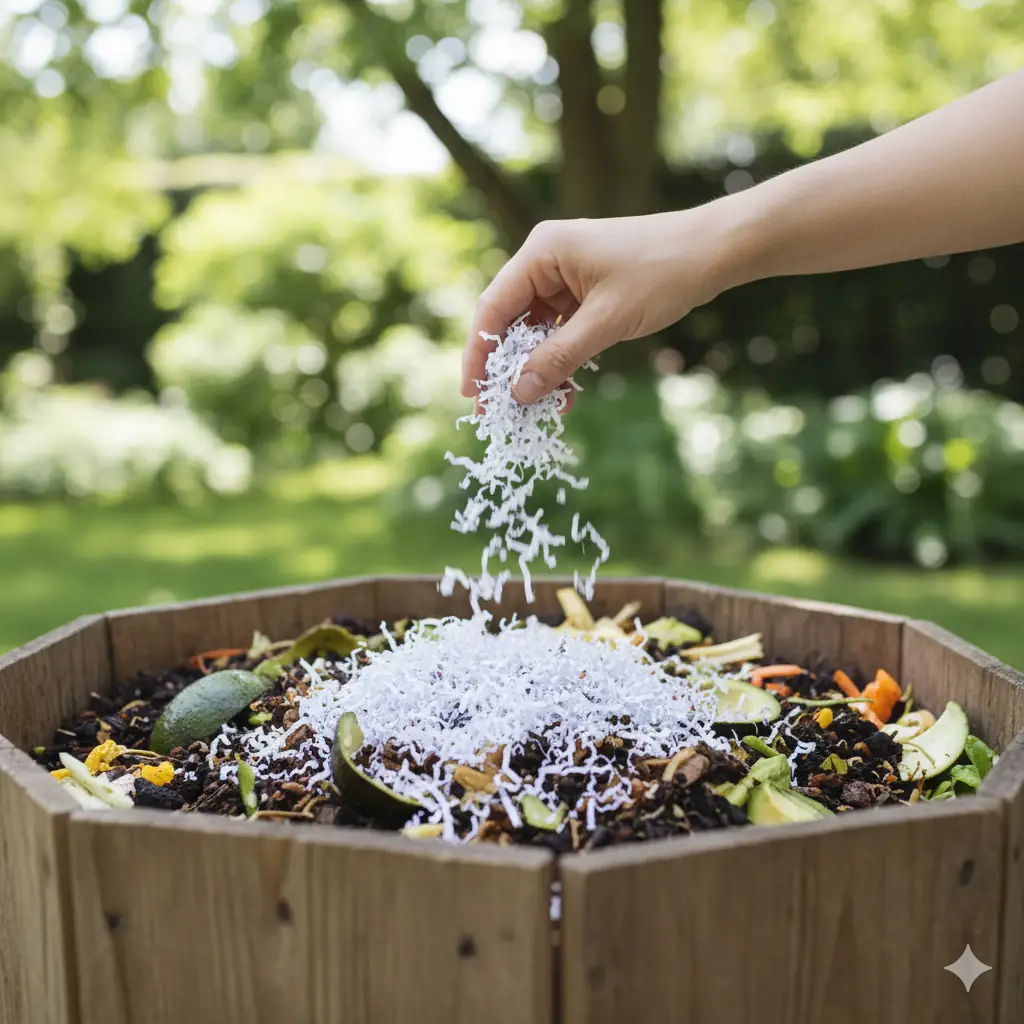
Treat shredded paper as your primary cover material. Whenever you add a batch of wet kitchen scraps (Greens), follow it immediately with a thick, fluffy layer of shredded paper.
This layering technique achieves two things: it balances the C:N ratio, and it covers the food waste, suppressing odors that attract flies and pests.
3. Moisten Before Mixing
Dry shredded paper can be slow to break down. Before adding it or during a turning session, lightly mist the paper with water until it’s damp, but not soggy. Remember the ‘wrung-out sponge’ test.
If you’re adding very wet scraps, the paper will absorb the moisture naturally, acting as the perfect counter-balance without needing extra water.
Example: When adding a bucket of watery fruit rinds, place the rinds in the pile, then immediately cover them with twice the volume of fluffy shredded paper. Then, gently mix the top layer.
📝 Notes on Paper and Composting Speed
- Speed: Paper breaks down faster than wood chips or bulky stems, making it an excellent medium for ‘hot’ composting.
- Source: If you collect a large amount of paper (e.g., from an office), store it in a dry, sealed bin so it’s always ready when you need to cover a batch of Greens.
- Worm Bedding: Shredded newspaper is the classic, low-cost bedding material for vermicomposting (worm composting), providing shelter and carbon for the worms.
Shredded paper is one of the easiest, most available resources for home composting. It allows you to transform common household waste into a critical component of healthy soil, making your composting journey cleaner, faster, and more efficient.