

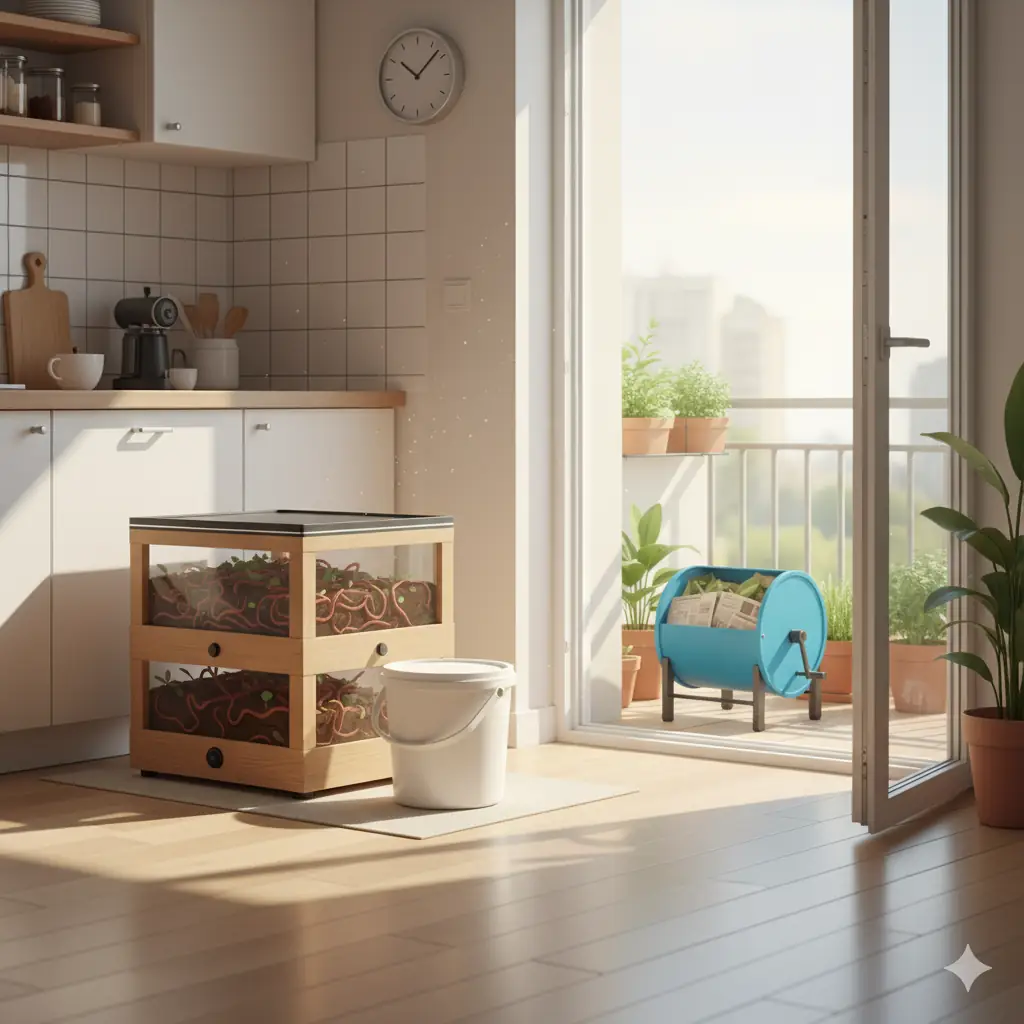

When you picture composting, you might visualize large wooden bins nestled in the corner of a spacious backyard. This beautiful image often deters apartment dwellers or those with tiny patios from ever starting. However, composting is absolutely possible, even when your space is measured in square feet rather than acres.
It simply requires a shift in strategy, focusing on efficient, contained, and often accelerated methods. These small-space composting hacks are designed to be odor-free and manageable, ensuring you can turn your kitchen waste into valuable soil amendment no matter how limited your footprint is.
Choosing Your Method: The Best Hacks for Limited Space
Not all composting methods are created equal when space is a premium. The traditional hot pile takes up too much room and demands frequent turning. Instead, we turn to specialized, compact systems that work beautifully indoors or on balconies.
1. The Vermicomposting Method (Worm Power)
Vermicomposting, using specialized composting worms like Red Wigglers, is perhaps the ultimate small-space hack. Worm bins are compact, usually measuring no more than a few feet in any direction, and can be kept inside, such as under a sink or in a quiet corner of a closet.
Worms are incredibly efficient at processing food scraps and produce nutrient-dense ‘castings’ without generating high heat or offensive odors. If managed correctly—fed small amounts and kept moist—a worm bin is discreet and highly productive.
2. The Bokashi Fermentation System
Bokashi is a two-step process that relies on anaerobic fermentation rather than decomposition. It’s fantastic for small spaces because it can process items traditional composting cannot, including meat, dairy, and oily foods, all inside an airtight bucket.
You layer food scraps with Bokashi bran (inoculated with beneficial microbes). The bucket is sealed for about two weeks, fermenting the waste. While the process itself is not composting, the fermented material is then quickly composted or buried in a minimal amount of soil.
- Vermicomposting (Worms): Excellent for vegetable/fruit scraps. Produces finished compost (castings) directly. Requires a cool, dark space.
- Bokashi (Fermentation): Handles all food types, including meat. Produces an acidic material that requires a secondary burial/compost step. Can be kept right in the kitchen.
3. Tumbler Composters for Balconies
If you have a small patio, balcony, or fire escape, a compact tumbler composter can be a perfect fit. Unlike stationary bins, tumblers are elevated, contained, and easy to turn, which speeds up the decomposition process and prevents pests.
Look for models that are insulated and elevated off the ground. Because they are sealed, they rarely emit odors. Just remember to maintain the proper balance—a handful of ‘greens’ (food scraps) followed by a few handfuls of ‘browns’ (shredded cardboard or leaves) with every rotation.
The Art of Material Management in Tight Quarters
One of the biggest challenges in small-space composting is managing the volume of materials, especially the necessary ‘browns’ (carbon sources). You can’t just rely on fallen leaves if you don’t have a yard. This requires some clever material sourcing.
Hacking Your Brown Material Supply
Indoor and apartment composting thrives on household ‘browns’ that you might otherwise throw away. These items are often available year-round and can be shredded easily.
Save cardboard egg cartons, paper towel rolls, junk mail (non-glossy), and office paper. Tear or shred these materials finely; small pieces decompose much faster, a crucial speed hack for small bins. Shredded newspaper is always a readily available, excellent option for bedding or carbon balance.
Pre-Processing Your Greens
The speed of composting is directly related to the surface area of the materials. In small bins, decomposition time matters even more. Therefore, always chop, dice, or even blend your food scraps before adding them to your system.
For example, instead of tossing a whole apple core, cut it into quarters. For tough items like broccoli stems, a quick whizz in a dedicated food processor (or even freezing them first) breaks down their cell structure, making them microbial fast food.
Crucial Maintenance Hacks for Odor Control
In a small space, odor control is not optional; it’s essential for a harmonious home environment. Unpleasant smells are almost always an indicator that the system is out of balance, usually lacking oxygen or containing too much ‘green’ material.
1. The Buried Food Hack
If you are using a worm bin or an open container system, always bury new food scraps completely beneath a layer of established bedding or finished compost. Exposing food scraps attracts fruit flies and is the main cause of odors.
Think of the bedding as a digestive blanket. The worms and microbes work on the food underground, keeping the surface clean and the air fresh. This simple practice solves 90% of small-space composting problems.
2. The Aeration and Monitoring Routine
Regularly check and gently aerate the material, especially in closed systems. In a worm bin, gently lift and drop the bedding to create air pockets. For tumblers, a quick spin every few days is usually enough.
If you detect a foul, sour smell, it indicates anaerobic conditions. The quick fix is to stop feeding, add a generous amount of dry, shredded cardboard, and gently aerate the entire contents to restore the oxygen balance.
A quick roadmap to starting a small-space worm bin:
- Choose Your Container: Select a dark, opaque plastic bin with secure drainage and air holes.
- Prepare Bedding: Fill the bin 1/3 full with moistened, shredded cardboard and newspaper.
- Add Worms: Introduce your Red Wigglers, placing them gently on top of the bedding.
- Wait and Observe: Don’t feed for the first week. Let them settle into their new home.
- Feed Slowly: Start with small, buried amounts of fruit and vegetable scraps, increasing slowly as the worm population grows.
Embracing small-space composting is a testament to sustainable living, proving that ecological responsibility isn’t limited by square footage. By employing these smart hacks—from leveraging worm power to managing your material sources effectively—you can successfully contribute to a greener planet right from your apartment or balcony. It’s an incredibly rewarding undertaking.