

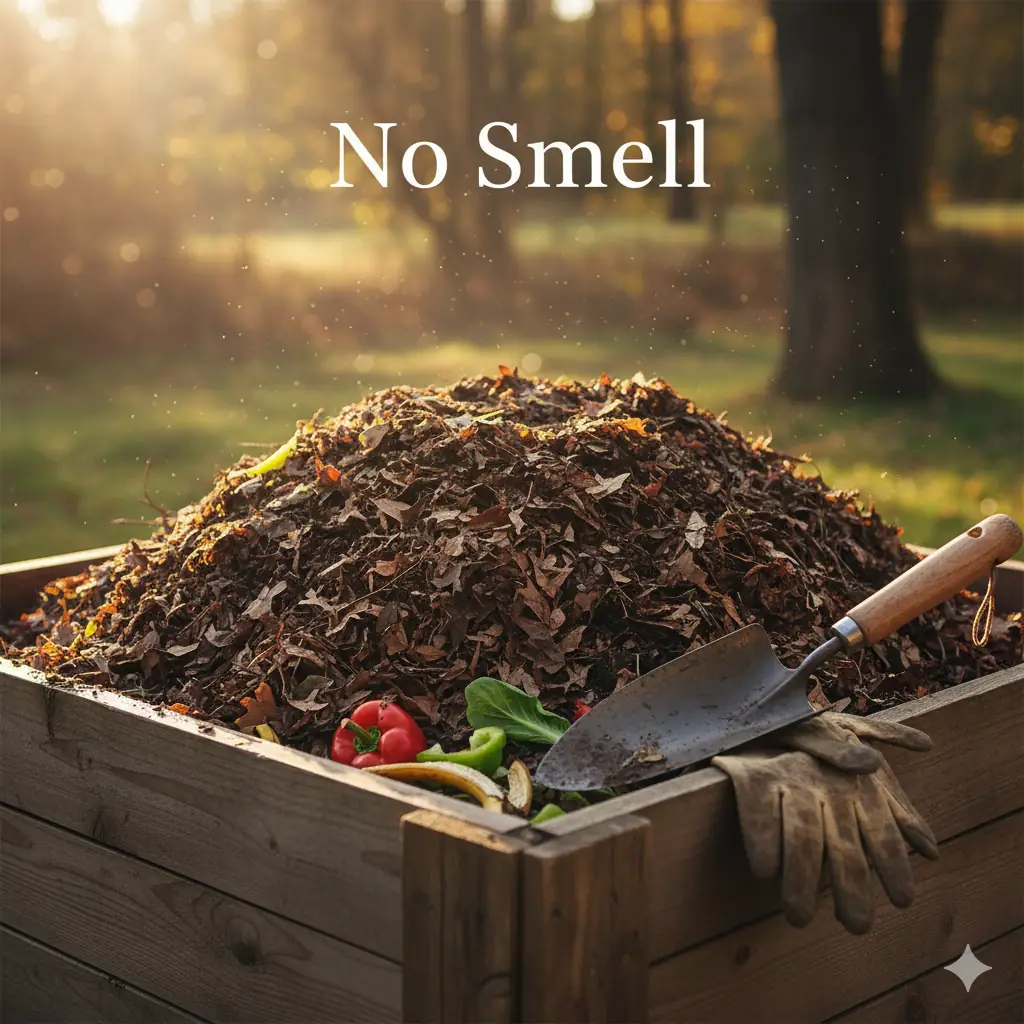

👃 The Biggest Fear: Demystifying Compost Odors
If you’re new to composting, the number one fear is usually the smell. We’ve all heard stories about neighbors complaining or a backyard turning into a rotten mess. The truth is, a properly managed compost pile should never stink.
If your compost smells foul—like rotten eggs or ammonia—it’s not failing; it’s signaling distress. This odor means the process has gone anaerobic, which simply means the beneficial microbes have run out of air.
By focusing on three foundational controls from day one, you can ensure your compost pile stays sweet and earthy, like rich forest soil, and avoids those dreaded smells.
🔑 Control 1: The Golden Ratio of Balance (C:N)
The majority of odor issues stem from an imbalance between your carbon-rich materials (‘Browns’) and your nitrogen-rich materials (‘Greens’).
The Nitrogen Problem
Greens (like fresh grass clippings or food scraps) are high in nitrogen. If you add too much, the microbes can’t process it all, and the excess nitrogen escapes as smelly ammonia gas.
Think of it as having too much protein and not enough fiber—it leads to trouble. This is the source of that acrid, urine-like smell.
The Carbon Solution
You need a healthy supply of dry, fibrous Browns (like shredded leaves, straw, or newspaper) to act as a sponge to absorb excess nitrogen and moisture. The ideal ratio is roughly 2–3 parts Browns for every 1 part Greens by volume.
Always keep a supply of dry Browns next to your bin. When you add a bucket of kitchen scraps (Greens), immediately cover it with a layer of Browns.
💨 Control 2: The Oxygen Lifeline (Aeration)
Anaerobic decomposition, which produces that potent methane and hydrogen sulfide smell, only occurs when the pile is starved of air. Your job is to keep it fluffy and oxygenated.
Turning is Key
Regular turning is your most effective tool. Use a pitchfork or a dedicated compost aerator to mix the pile once a week, or at least every time you add a large batch of fresh materials.
Turning breaks up dense pockets and infuses the entire mass with fresh oxygen, which the fast, efficient, and non-smelly aerobic bacteria require.
Prevent Compaction
If your pile is mostly wet food scraps and grass clippings, it will quickly compact. Add materials that resist compaction, such as wood chips or small twigs, called bulking agents. They maintain vital air channels inside the heap.
💧 Control 3: The Moisture Sweet Spot
A pile that is too wet will often become compacted, driving out air and leading to a sour, rancid smell—another sign of anaerobic activity.
Quick Tip: The Wring Test
Your compost should feel like a wrung-out sponge. If water drips out when you squeeze it, it’s too wet. Add dry Browns immediately and turn the pile well.
If your pile is too dry, decomposition will slow down, but it won’t usually smell bad. A pile that is too wet, however, suffocates the good microbes and invites the stinky ones.
🚫 Ingredient Control: What to Avoid Entirely
Some materials are high-risk for odor and pest attraction in a typical home compost setup. It’s best to avoid these entirely to guarantee an odor-free experience.
- Meat, Bones, and Fish: These break down very slowly, attract rodents and flies, and produce powerful, foul odors as they rot.
- Dairy Products: Milk, butter, and cheese scraps quickly putrefy and attract pests without high heat.
- Oily/Fatty Foods: Oils and fats coat the compost materials, making it harder for water and microbes to penetrate, slowing the whole process down and encouraging rancidity.
✨ Essential Tips for Odor-Free Composting
- Always Bury Greens: Never leave fresh food scraps sitting exposed on top of the pile. Dig a small hole, drop the scraps in, and cover completely with a thick layer of dry leaves or finished compost.
- Chop it Up: The smaller the pieces (especially Greens), the faster they break down, reducing the time they have to sit and potentially create odors.
- Keep it Covered: Use a lid or tarp on your bin, especially during rainy seasons. This prevents waterlogging and keeps pests out.
🚀 Starting Your Odor-Free Journey
Starting compost without bad smell is entirely achievable when you recognize that smell is a warning sign, not a normal condition. Your goal is to create a happy, oxygen-rich environment for the aerobic microbes.
By prioritizing the balance of Browns and Greens, ensuring regular aeration, and keeping that moisture level just right, you will bypass the common pitfalls and enjoy the satisfying process of creating beautiful, sweet-smelling ‘black gold’ for your garden.