

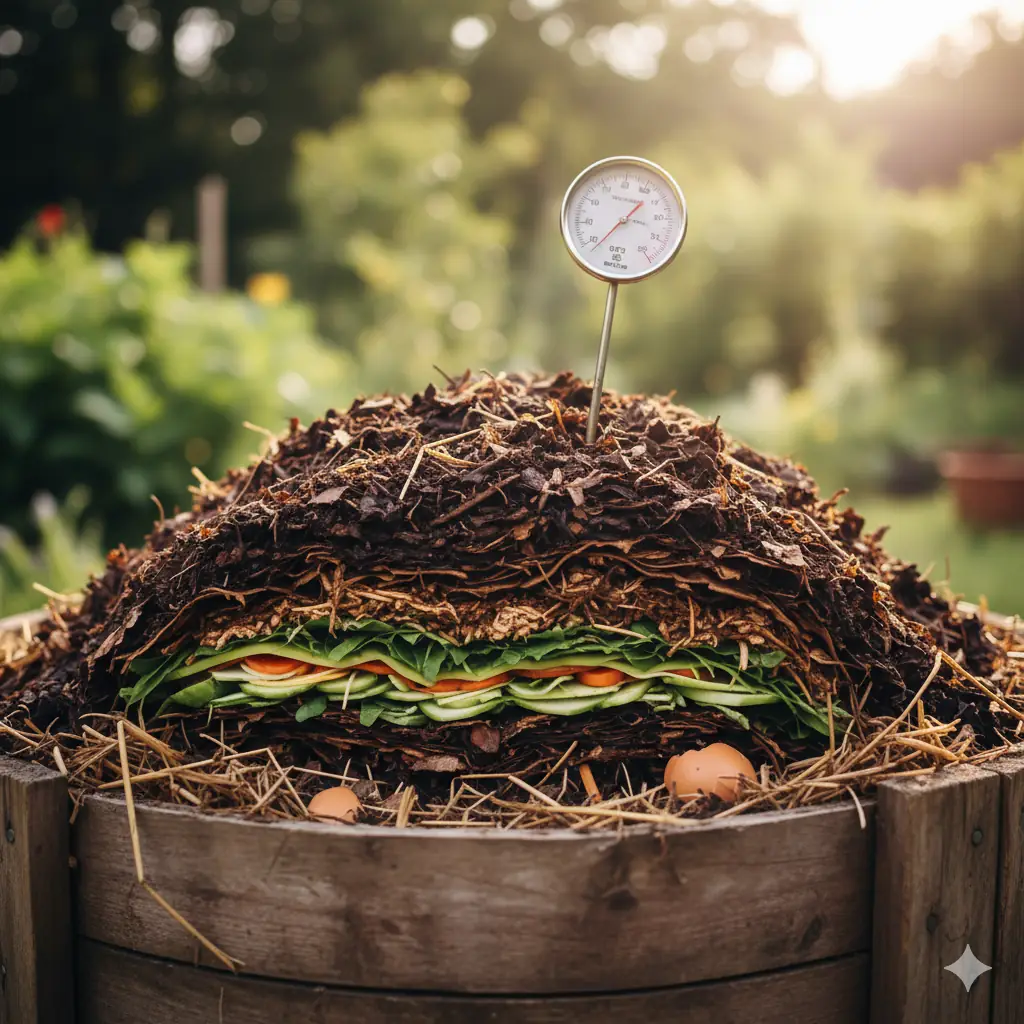

🌱 Starting Simple: The Philosophy of Your First Compost Pile
Starting your first compost pile is one of the most rewarding steps you can take toward a more sustainable garden. It’s an exercise in transforming kitchen and yard waste into nutrient-dense ‘black gold.’
Don’t be intimidated by the science! Composting relies on simple, controllable principles: balancing the diet of tiny microbes, providing air, and maintaining moisture.
By following this step-by-step blueprint, you’ll establish a healthy, efficient composting system that produces rich soil amendment without the common problems like odor or pests.
Step 1: Choose Your Method and Location
Selecting the Right Container
Your choice of container should align with your available space and the volume of waste you produce. Options range from simple open piles to sealed tumblers.
- Bins/Cages: Affordable and offer large capacity, great for yard waste. They require manual turning.
- Tumblers: Excellent for ease of turning and pest control, but capacity is limited.
- Open Piles: Best for high volumes (like fall leaves), but require more space and management.
Finding the Perfect Spot
Choose a location that is easily accessible year-round, ideally near your garden and a water source. A spot with partial shade is usually best, as direct, harsh sun can dry out the pile too quickly, slowing down the process.
Also, ensure the area has good drainage so excess water doesn’t pool, which can lead to anaerobic conditions at the base of your bin.
Step 2: Gather Your Ingredients (The C:N Balance)
Composting requires two distinct types of material, known as ‘Browns’ (carbon) and ‘Greens’ (nitrogen). You need to gather a healthy supply of both before you start building the pile.
The Greens (Nitrogen Activators)
These are moist, fresh materials that provide protein for the microbes and fuel the heat. Examples include fruit and vegetable scraps, fresh grass clippings, coffee grounds, and manures.
Remember that too many Greens without balance cause the dreaded ammonia smell. They are the accelerator, but you need structure too.
The Browns (Carbon Structure)
These are dry, fibrous materials that provide energy for the microbes and structure for aeration. Examples include dry leaves, shredded cardboard, wood shavings, paper, and straw.
It’s crucial to always have a larger volume of Browns than Greens on hand, ready to cover up any new wet kitchen scraps you add.
Step 3: Build the Foundation (The Lasagna Method)
The best way to start a new pile is by layering the materials—think of it as building a lasagna for the microbes—to ensure an even distribution of air, carbon, and nitrogen.
- Base Layer (Drainage): Start with a coarse 6-inch layer of bulky Browns, like small twigs or wood chips. This ensures crucial drainage and prevents the bottom from compacting.
- Layer 2 (Carbon): Add a thick 4–6 inch layer of your main Browns (dry leaves, straw).
- Layer 3 (Nitrogen): Add a thin 2–3 inch layer of your Greens (kitchen scraps, grass clippings).
- Repeat: Continue alternating layers of Browns and Greens until the bin is full or you reach a manageable size. Always cap any fresh Green material with a final layer of Browns.
A good starting goal for pile size is at least 3 feet by 3 feet by 3 feet. This critical mass is necessary to generate enough internal heat for fast decomposition.
Step 4: The Essentials—Moisture and Air
Once your pile is built, you must actively manage the two most common reasons for compost failure: lack of moisture and lack of air.
The Moisture Check
Your compost should be consistently moist, but not soggy. The classic test is squeezing a handful: it should feel like a wrung-out sponge.
If the pile is dry, water it thoroughly while turning it. If it’s too wet, add extra dry Browns (cardboard, sawdust) to absorb the excess liquid and turn to mix.
The Aeration Check
Turning the pile is non-negotiable for fast, odorless composting. Turn the pile completely once a week, or whenever you notice the internal temperature dropping or a hint of a bad smell.
Turning introduces the oxygen needed by the beneficial microbes, preventing the transition to slow, smelly anaerobic decay.
Step 5: Monitoring and Maintenance
The Temperature Tells All
A fast, ‘hot’ compost pile can reach 130°F–160°F within the first few days. Investing in a compost thermometer is helpful, as high heat indicates peak microbial activity.
When the temperature drops, it signals that the microbes have consumed the available oxygen, making it the perfect time to turn the pile and refuel the process with air.
Micro-Case Example: If your pile gets wet after a heavy rain and smells sour, you know two things: 1) too much moisture, and 2) anaerobic conditions. The solution is immediate turning and adding dry straw to soak up the water.
Step 6: Harvesting Your Black Gold
The waiting time varies based on your method—from a few weeks in a hot tumbler to several months in a passive bin. You know your compost is ready when it is:
- Uniformly dark brown or black.
- Crumbly and light in texture.
- No longer smells like fresh food scraps; it smells earthy and pleasant.
Use the finished compost to topdress your lawn, mix into garden beds, or enrich potting soil. It closes the loop on your kitchen waste and rewards you with superior soil health for the next growing season.