

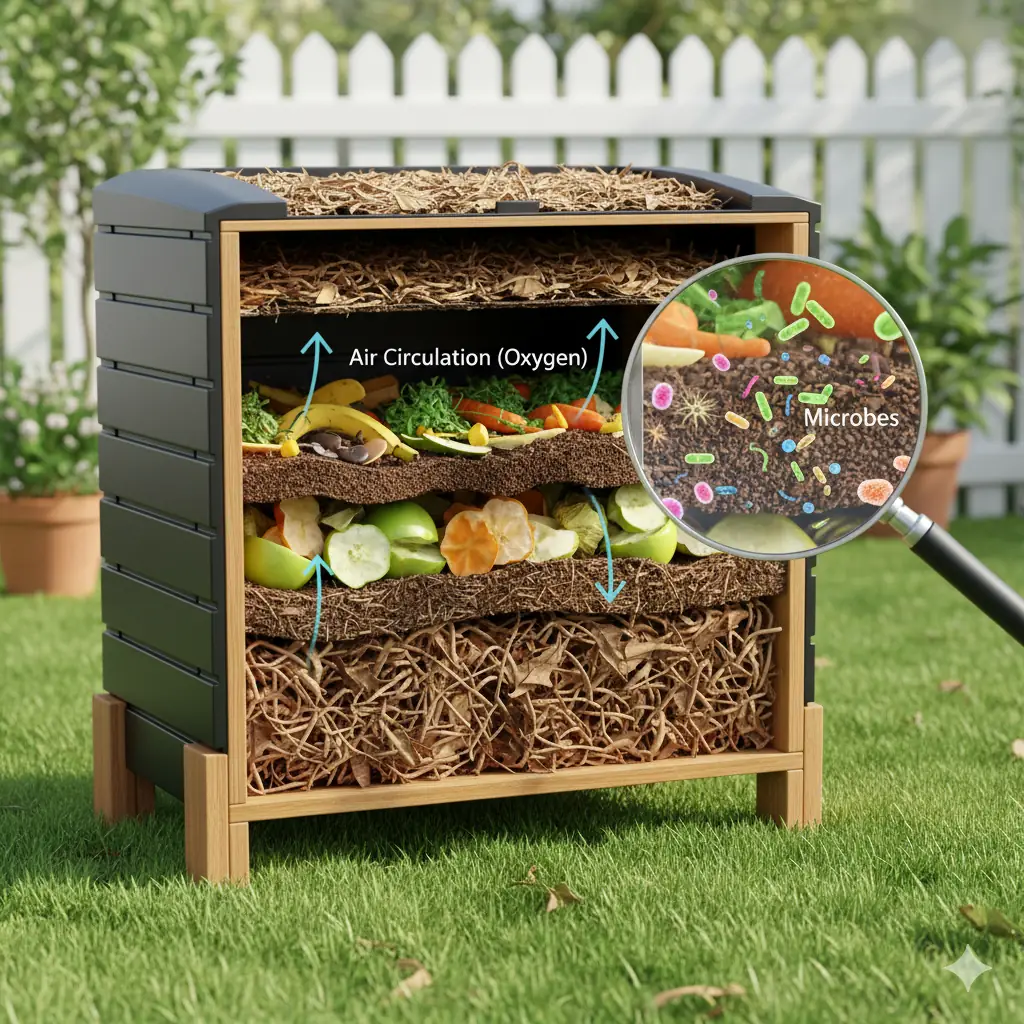

🌱 The Ultimate Guide to Understanding Home Composting
If you’ve heard the word ‘composting’ and immediately thought of massive, smelly piles of garbage, think again! Home composting is a simple, natural process that takes place right in your backyard, balcony, or even under your sink.
It’s essentially nature’s most efficient recycling program, turning ordinary organic waste into an extraordinary soil enhancer. This rich material is often called ‘black gold’ by gardeners, and for good reason.
🌎 What Exactly is Home Composting?
At its core, home composting is the controlled decomposition of organic materials. You are deliberately providing the perfect environment for tiny organisms—bacteria, fungi, and insects—to break down kitchen scraps and yard waste.
Think of your compost bin as a miniature ecosystem where decomposition is sped up. Instead of waiting months or years for materials to break down naturally, composting delivers results in a matter of weeks or months.
The goal is to produce a dark, crumbly, nutrient-rich substance called compost, which can then be added back to your garden soil. This completes a beautiful, sustainable loop, reducing landfill waste and improving your plants’ health.
🔬 How Does the Composting Process Work?
The magic of composting isn’t actually magic at all; it’s basic biology and chemistry. It requires the right balance of four key ingredients to work efficiently. Getting these right is the secret to successful composting.
The Four Key Ingredients for Compost Success
1. Carbon (The Browns)
Carbon-rich materials provide energy for the microbes and add bulk to the pile, which allows air to circulate. They are typically dry and brown, hence the nickname.
Examples include dried leaves, shredded newspaper, cardboard, sawdust, straw, and wood chips. A good rule of thumb is to use two to three times as much volume of ‘browns’ as ‘greens’.
2. Nitrogen (The Greens)
Nitrogen-rich materials provide the proteins and enzymes necessary for the microbes to multiply and break down the carbon. These are generally moist and green.
Examples are fruit and vegetable scraps, coffee grounds, tea bags, grass clippings, and manure. Too many greens, and your pile might get slimy and smelly; too few, and the process will stall.
3. Water (Moisture)
Microbes, like all living things, need moisture to survive and operate. The compost pile should be consistently damp, but never soaking wet.
A great comparison is a wrung-out sponge: it’s moist enough to feel damp, but no water should drip out when you squeeze it. This keeps the microbes happy and active.
4. Air (Oxygen)
The composting process we focus on is called aerobic decomposition, meaning it requires oxygen. Without sufficient air, the pile becomes anaerobic, which is when those awful, sulfurous odors appear.
This is why turning or stirring your pile is so important. By introducing fresh oxygen, you keep the healthy, odor-free microbes thriving and speed up the breakdown of materials.
♻️ What Goes In and What Stays Out?
Understanding which materials are compostable is crucial, especially for beginners. The general rule is: if it was once alive and wasn’t processed in a way that makes it harmful, it can likely be composted.
The Green Light: Materials to Include
- Fruit and vegetable peels/scraps (e.g., banana peels, apple cores).
- Coffee grounds and tea bags (paper only).
- Eggshells (crushed for faster breakdown).
- Yard waste like grass clippings, dead leaves, and small twigs.
- Shredded paper and plain corrugated cardboard (rip off plastic tape).
The Red Light: Materials to Avoid
Certain items should be kept out of a standard home compost bin, especially if you live in a dense area or have concerns about pests or disease.
- Meat, bones, and fish: These attract pests and can create harmful bacteria.
- Dairy products and fats/oils: Similar to meat, they cause odors and attract animals.
- Diseased plants: The composting temperature might not be high enough to kill pathogens.
- Pet waste (dogs/cats): Contains parasites and pathogens that can be harmful to humans.
- Treated wood or coal ash: May contain chemicals that contaminate the finished compost.
🪜 Home Composting Methods for Every Space
One of the best things about composting is that it can be adapted to almost any living situation, from a sprawling garden to a tiny apartment kitchen.
1. Traditional Pile/Bin Composting
This is the classic method, suitable for those with yard space. You simply layer materials in a dedicated compost bin or in a free-standing pile. It requires periodic turning to aerate the material.
2. Tumbler Composting
Tumblers are large, sealed containers mounted on a frame, allowing them to be rotated easily. They are great for small backyards and patios because they are neat, keep pests out, and make the crucial turning process effortless.
3. Vermicomposting (Worm Composting)
This method uses specialized composting worms (usually Red Wigglers) inside a small bin to break down food scraps. It’s perfect for indoor use or small spaces like balconies since the worms do all the turning and are generally odorless when done correctly.
4. Bokashi Composting
Bokashi is technically a fermentation process, not true decomposition. It uses a specific bran mix to pickle food scraps (including small amounts of meat and dairy!) in an airtight container. Once fermented, the material is buried in the soil to complete the breakdown process.
🌟 Benefits and Considerations of Composting
The reasons for composting are compelling, but it’s important to go into the process with open eyes, understanding the minimal upkeep involved.
| Composting Pros | Composting Cons |
|---|---|
| Reduces household waste sent to landfills significantly. | Requires monitoring the carbon-to-nitrogen balance. |
| Creates a natural, chemical-free soil conditioner. | Can take 2-6 months for finished compost. |
| Saves money on commercial fertilizers and soil amendments. | Improper management can lead to odors or pests. |
| Improves soil structure, water retention, and aeration. | Requires some dedicated space (bin, tumbler, or worms). |
A Quick Statistic: Did you know that organic materials like food scraps and yard waste make up about 25-30% of what Americans throw away? Composting is a direct way you can cut that volume significantly.
✨ Turning Black Gold into Garden Riches
So, you’ve followed the steps, waited a few months, and now your pile has become a dark, earthy-smelling material. That’s your finished compost!
Finished compost should no longer look like the original ingredients; it should be crumbly, cool, and uniform in texture. It’s ready to use once you can no longer identify the eggshells or vegetable pieces you put in.
You can use this compost as a top dressing around plants, mix it into potting soil for containers, or spread it lightly over your lawn. It slowly releases nutrients, acts like a sponge for water, and introduces beneficial microbes back into the earth.
Home composting isn’t just an activity; it’s a commitment to a healthier planet and a more productive garden. It’s a simple change that makes a big, sustainable difference.